
As part of my studies, I took an additional course called ‘Visual Storytelling’, which focused on understanding how stories are created and how they can be expressed visually. For this project, I explored the philosophical question: ‘What happens after death?’
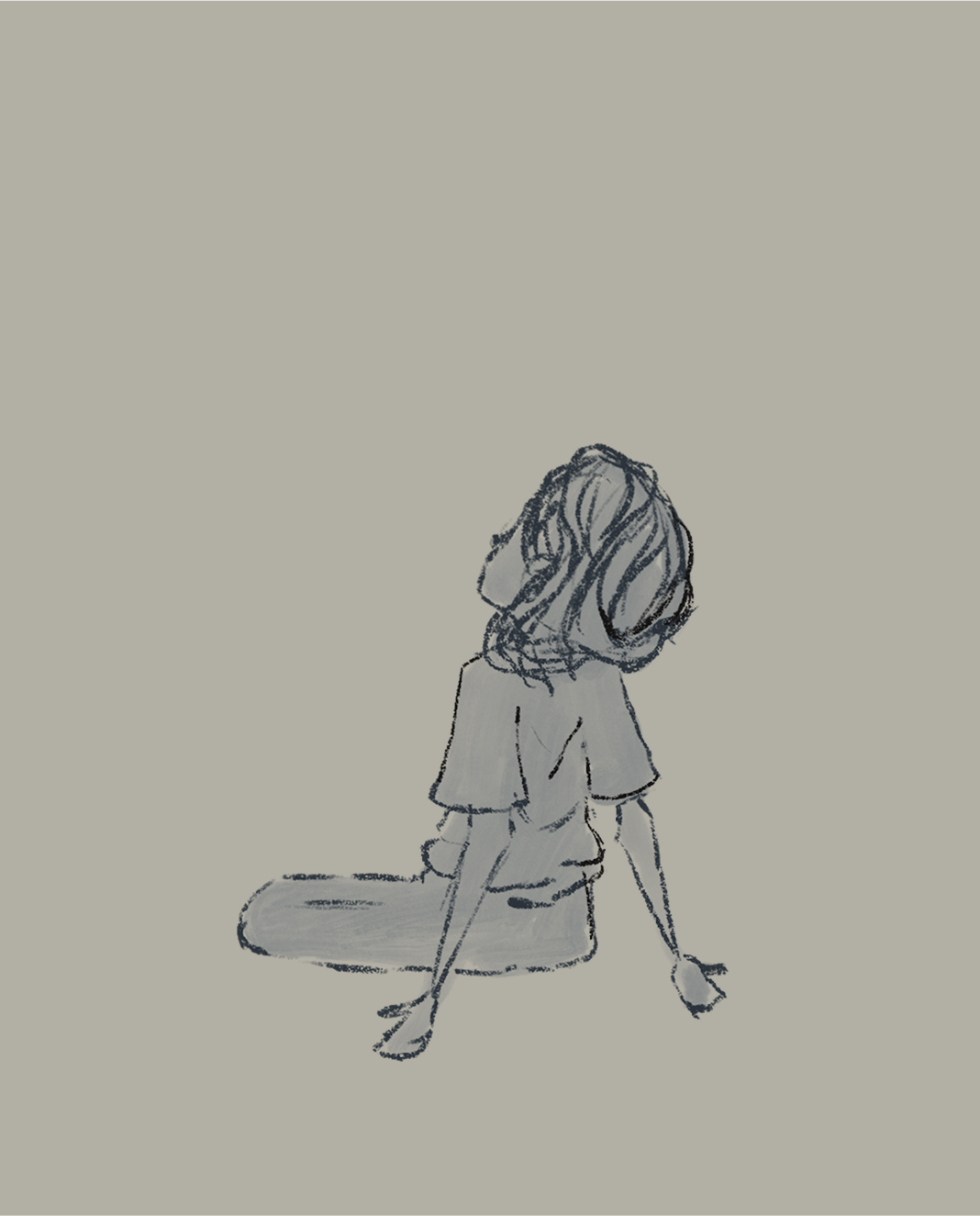
The narrative is structured using the classic three-act model: Setup, Confrontation and Resolution. The first act opens with a rose symbolising the child, representing her life and its passing. The falling petals transition to a bird’s-eye view of the girl lying in the grass and gazing peacefully up at the sky. Soft clouds drift above her, creating a calm and gentle atmosphere.
In the second act, the clouds begin to take on recognisable shapes, such as books, a teddy bear and a toy ship. These depict the child’s memories and the joyful moments of her life. This peaceful moment is interrupted by the arrival of a raven. It transforms into a tall, humanoid figure looking down at the girl.
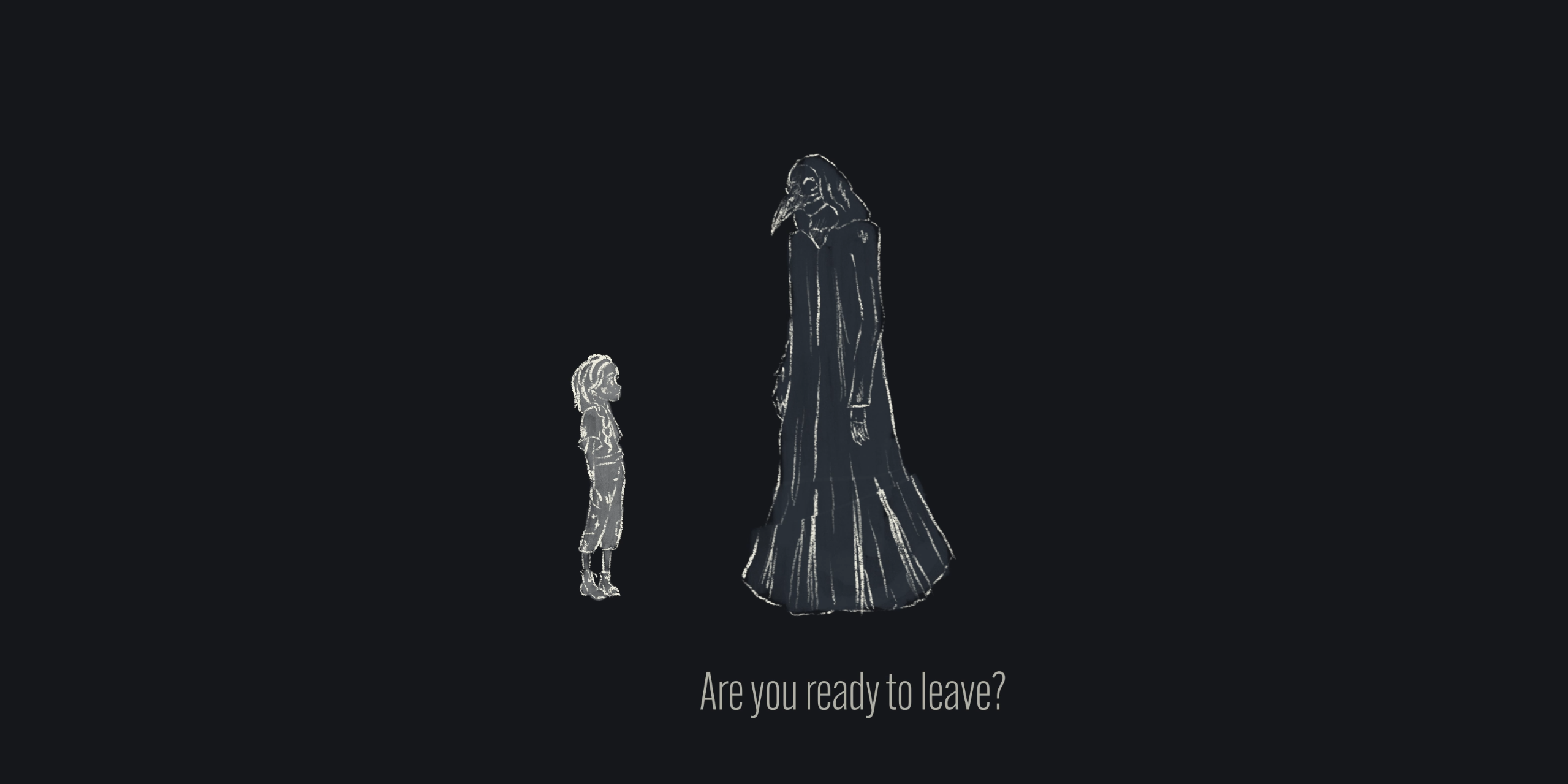
This marks the beginning of the third act. The grass and clouds dissolve into a dark void filled with twinkling stars. The figure reveals itself to be Death, who gently asks the child if she is ready to leave her life behind and find peace in his realm. Death offers the child their hand in invitation.
Character Design
A child was deliberately chosen to create empathy and emotional connection. Children naturally evoke feelings of protectiveness, vulnerability, and compassion in viewers, encouraging an instinctive emotional response.
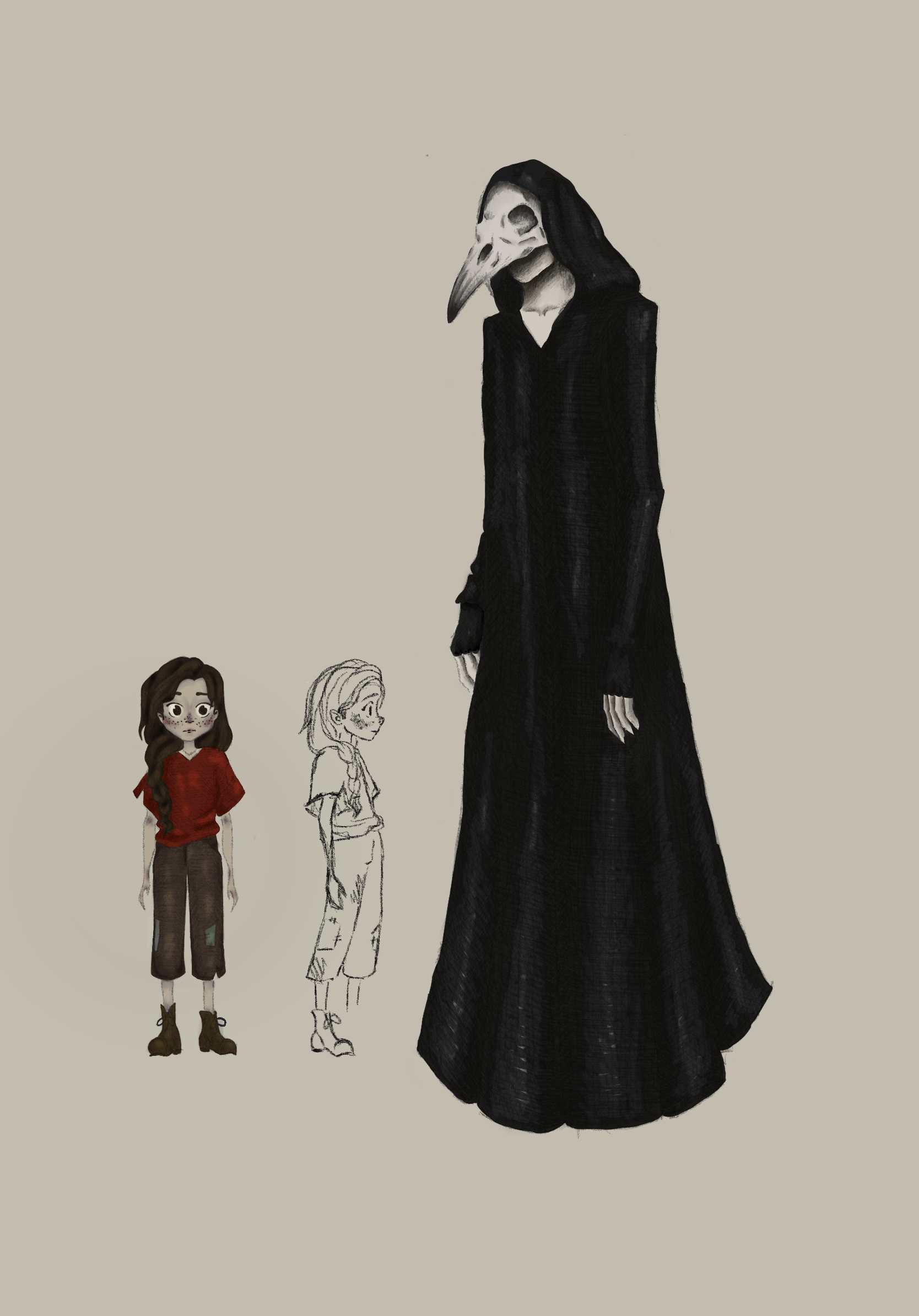
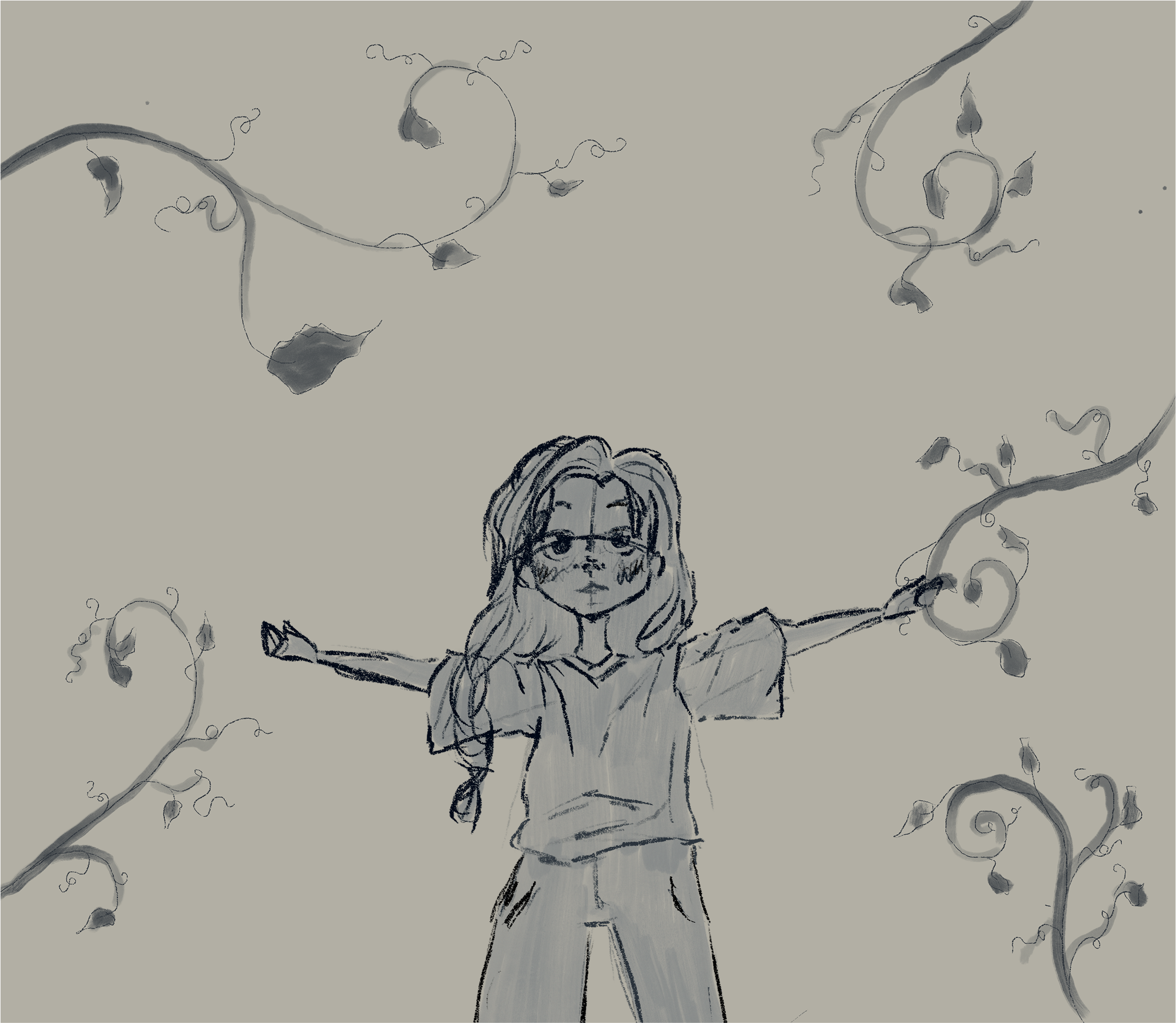
She is depicted with long, brown braided hair, big brown eyes, a stubby nose, and worn, patched clothing in warm tones. Her posture reflects a slightly cheeky and stubborn character.
Although the cause of her death is not directly explained, her design suggests a hard life filled with struggles. This subtly implies that death may have been a form of relief, supporting the gentle and compassionate portrayal of Death as a guiding figure rather than a threatening presence.
Her life and its passing are symbolised by the rose and its falling petals, representing fragility and the fleeting nature of existence.
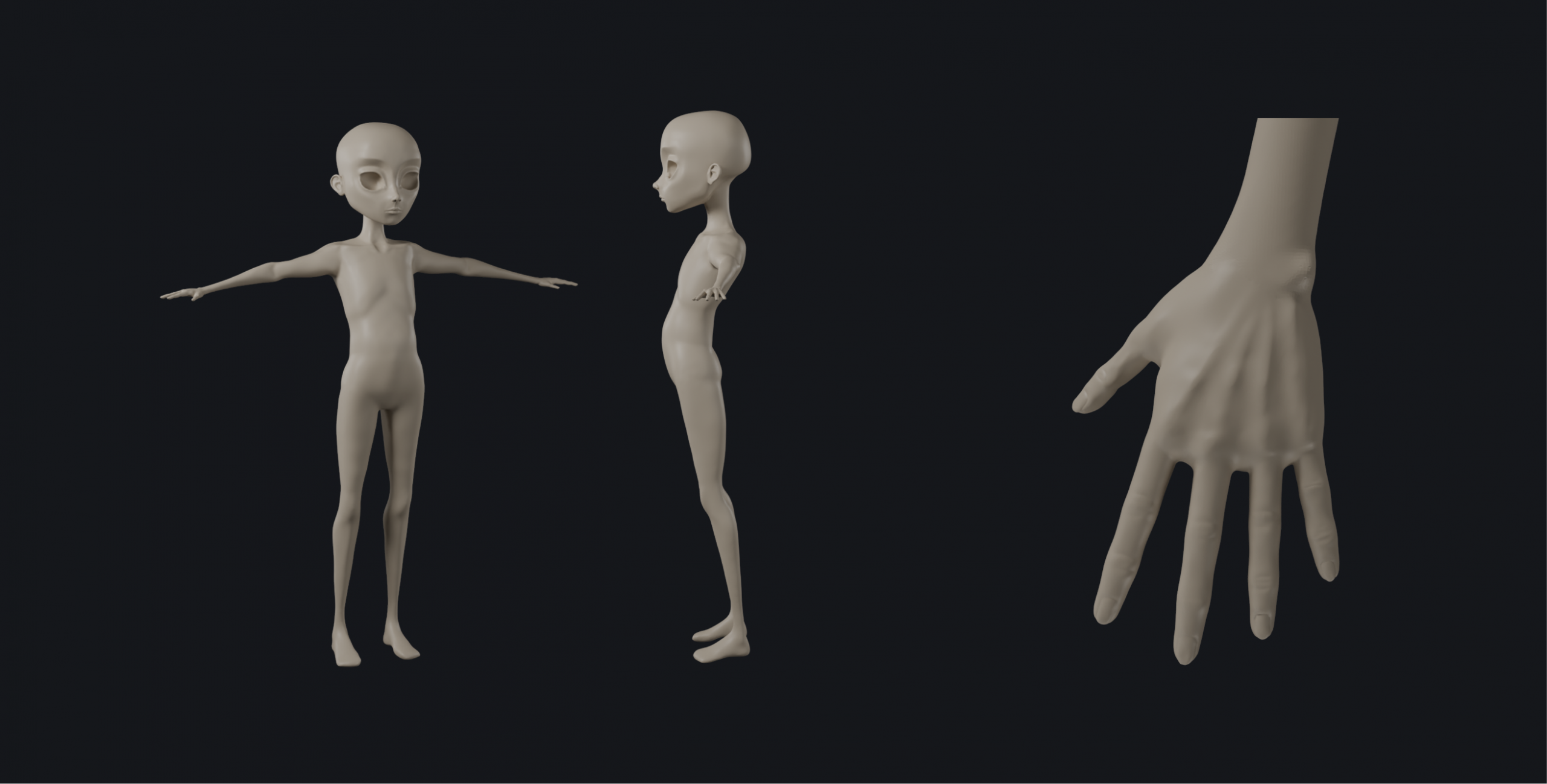
Death is depicted as a tall, pale, and bony figure with elongated features. He wears a long black cloak with a hood that conceals his head and body. A raven mask hints at his original form while concealing his emotions and facial expressions. The only visible human detail is his hand, with long, thin fingers that gently reach out, emphasising both distance and invitation.
Although he is humanoid in shape, he is not fully human. By reducing recognisable features, Death becomes a universal figure that can be interpreted across different cultures rather than belonging to a single representation.
The colour palette surrounding Death is cold and distant, yet softened subtly to maintain a calm and gentle presence.
He is symbolised by the raven, night and stars, which are mostly unchanging and constant elements.
Work Process
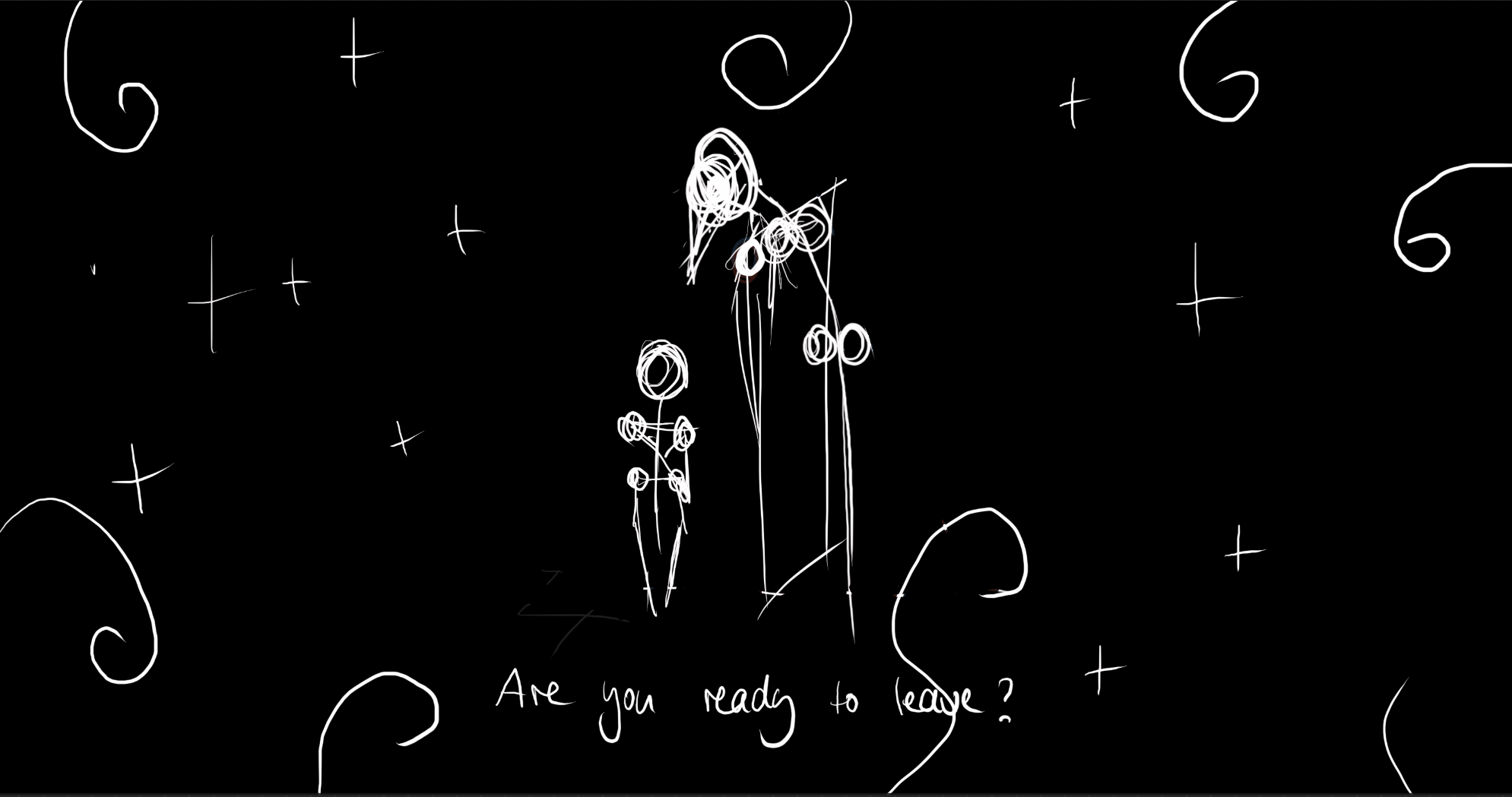
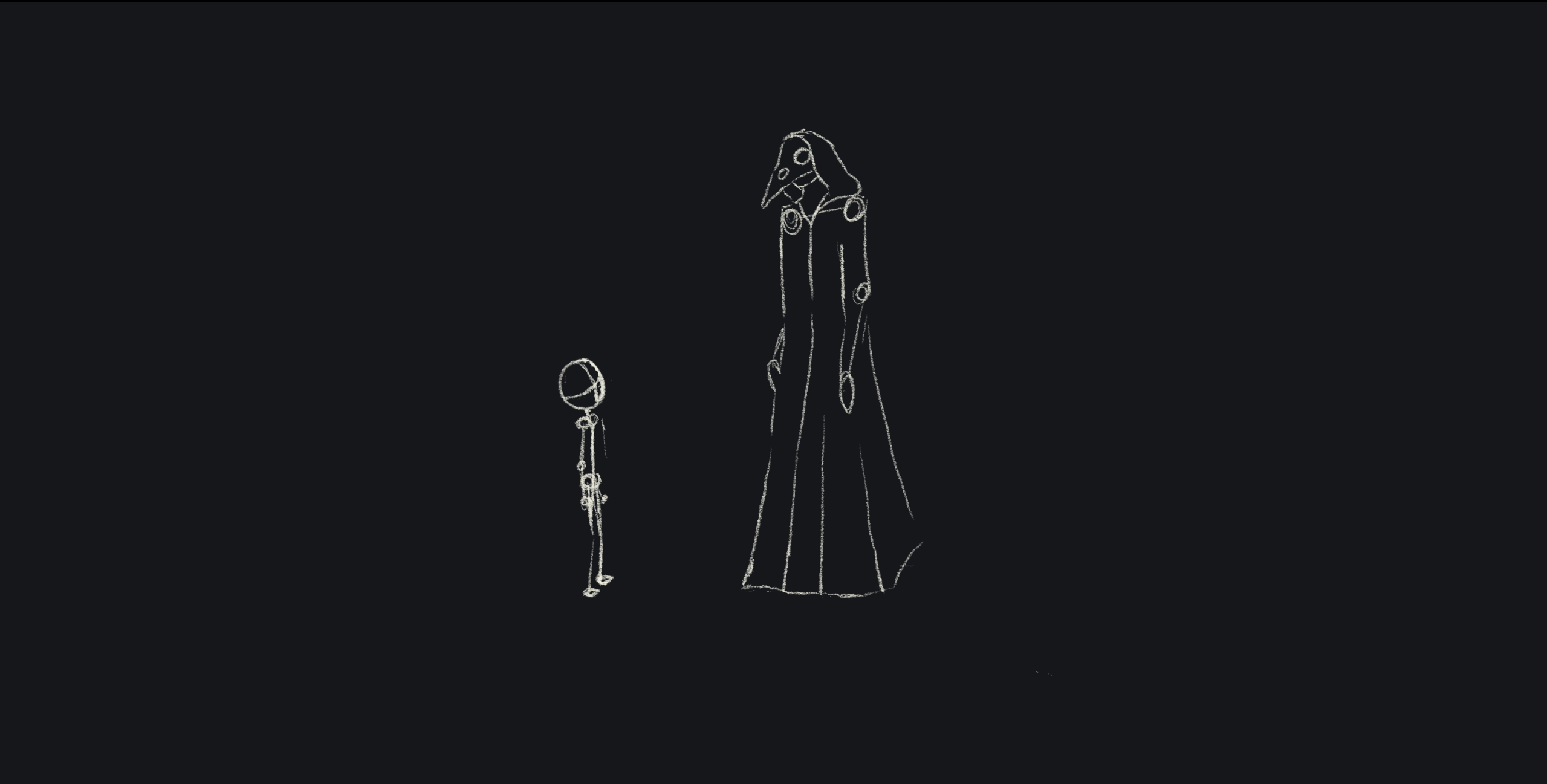
Visually, the project began with a simple hand-drawn animatic. It started with rough sketches used to establish basic animations, which were later gradually refined into the final character designs.
The current colour palette is intentionally limited and dominated by cooler tones. This will evolve as the project continues, as I am currently developing a full 3D animation in which I am learning to animate both humanoid and bird-like beings, as well as the morphing between different forms.
The long-term goal is to transform the project into a Virtual Reality experience, allowing viewers either to observe the story from a distance or to become directly involved by experiencing it from the child’s perspective.
This could also interest you:)
Schattenmaler
University – Project 1
Fractal
University – Projekt 2
AROS
University, AIxDesign – VR Experience
Schattenmaler
University – Project 1
Fractal
University – Projekt 2
AROS
University, AIxDesign – VR Experience