Schattenmaler is a collaborative project that acts as the first preparatory project for the Bachelor’s degree.
Our project idea involves creating a 3D world that deals with the topic of phobias. Fear of the outside world serves as the starting point for the design of our world.
The story takes place in a colourful fantasy forest where the main character, a grumpy old painter, lives in an isolated wooden hut. Due to his severe forest phobia, he lives in complete isolation, which is reflected in both his appearance and that of his house. Despite his fear, however, the Painter is very fascinated by the forest and spends a lot of time painting an idealised and distorted version of it on canvas. In addition, a small forest creature named Kilix appears, who proves to be a valuable friend. Kilix aims to befriend the Painter and, to this end, procures items from the forest, which he gives to the Painter as gifts.
Our goal is to create the two characters and their worlds and to design a few style frames from the developed story to convey the atmosphere.
Farah Diab Harake & Elisabeth Schenk
WS 2023/2024
The Painter leaves his safe home to find his new-found friend Kilix and free him from the prison of teapot civilisation, for which he must fight his fear of the outside world and go alone into what he sees as a dark forest.
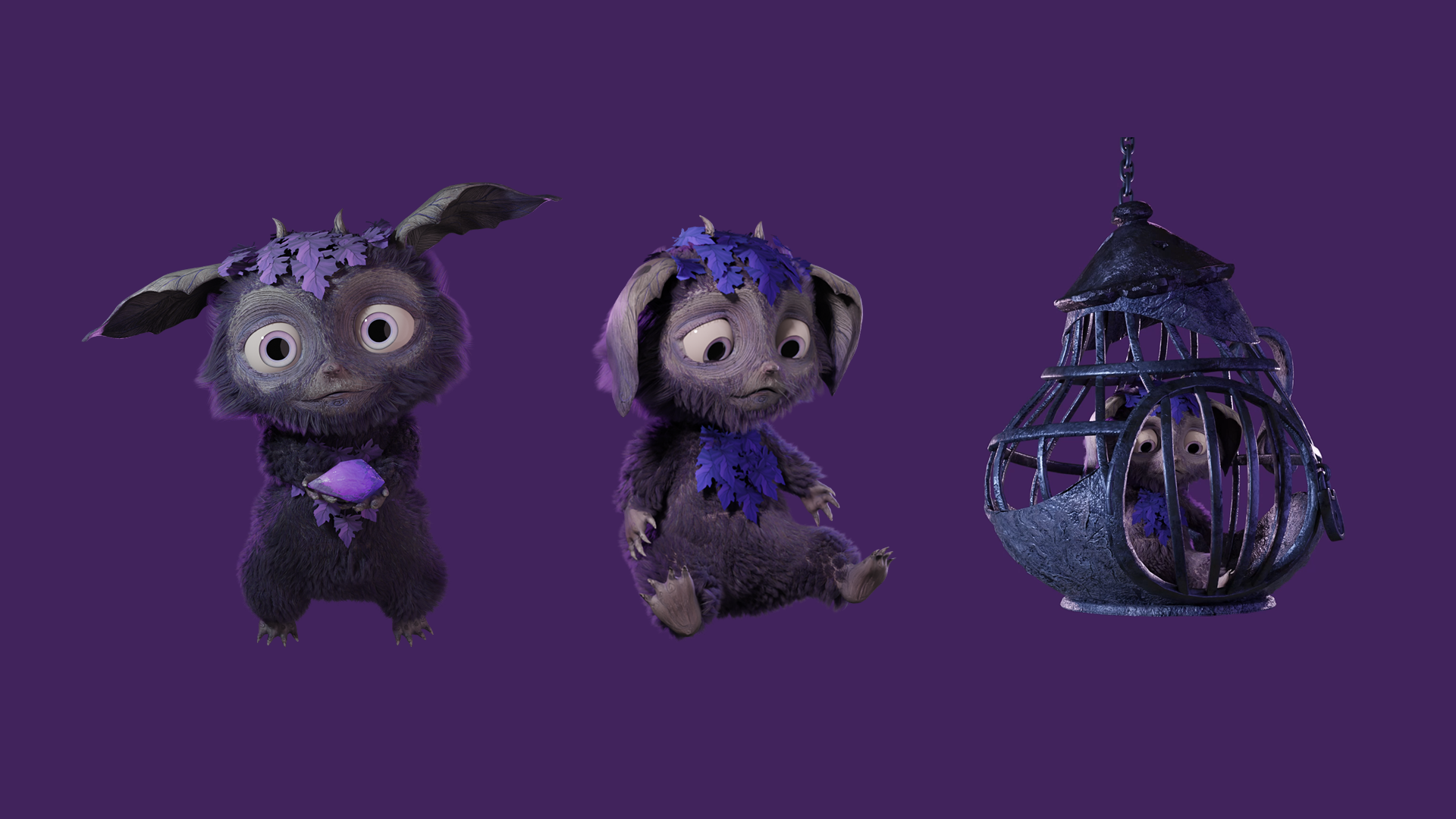
The basic idea behind Kilix was a cute but somewhat silly creature that comes from a fantasy forest and loves to collect small objects and things, if not to say, he steals them.
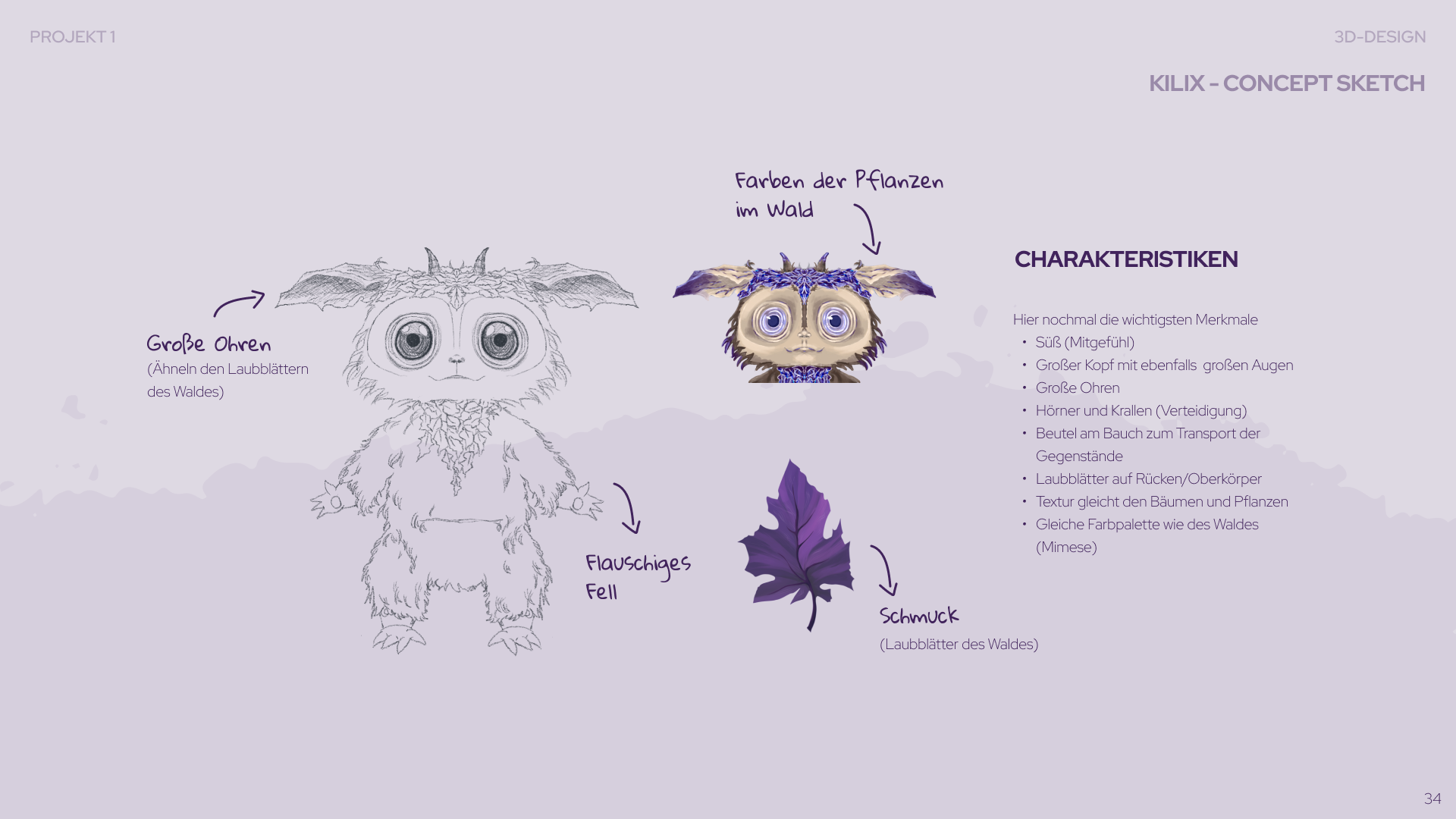
Therefore, it was important to me that Kilix’s entire design should reflect the forest, Kilix naivety and its joy in collecting through colours, texture and other details.
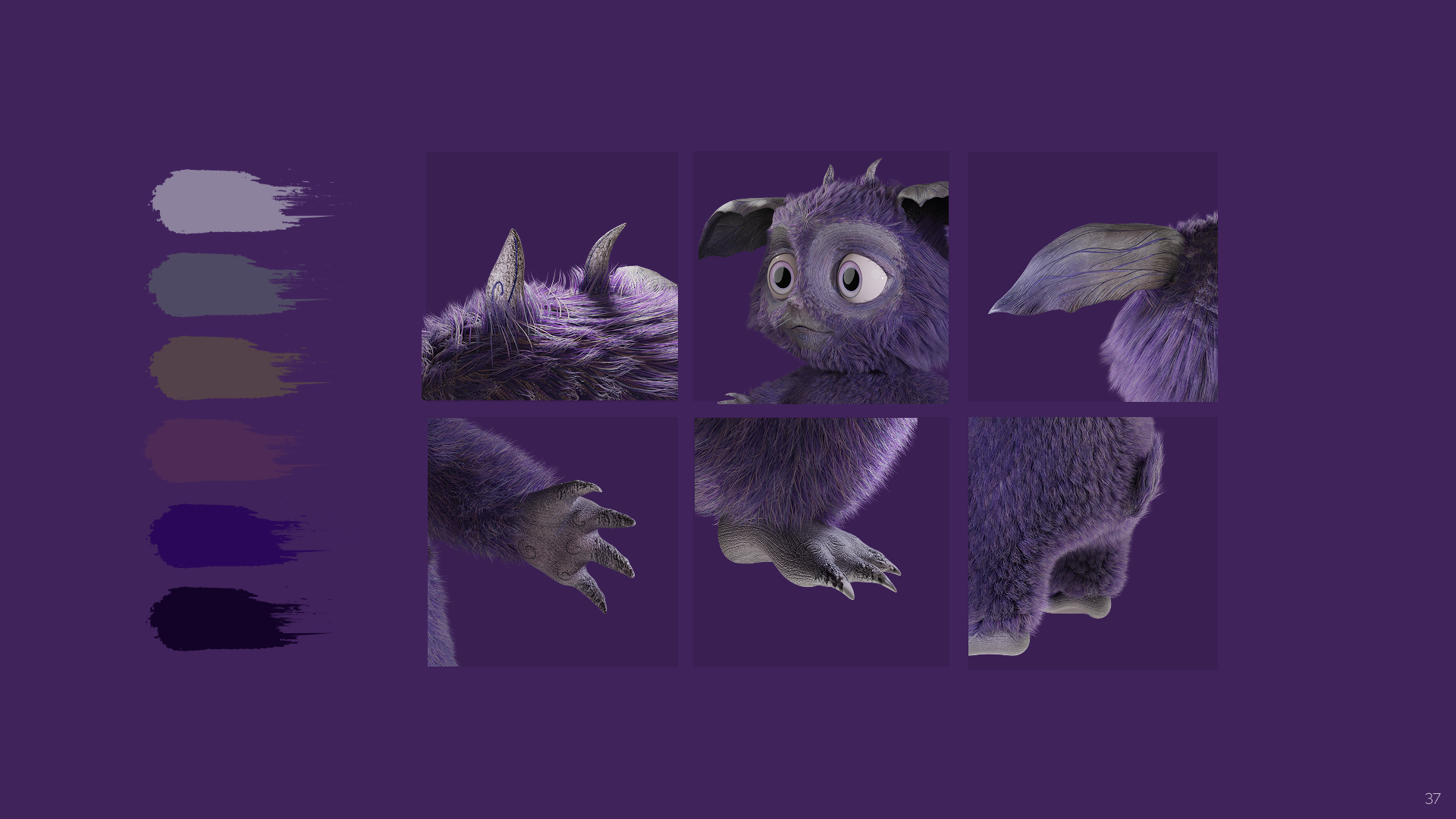
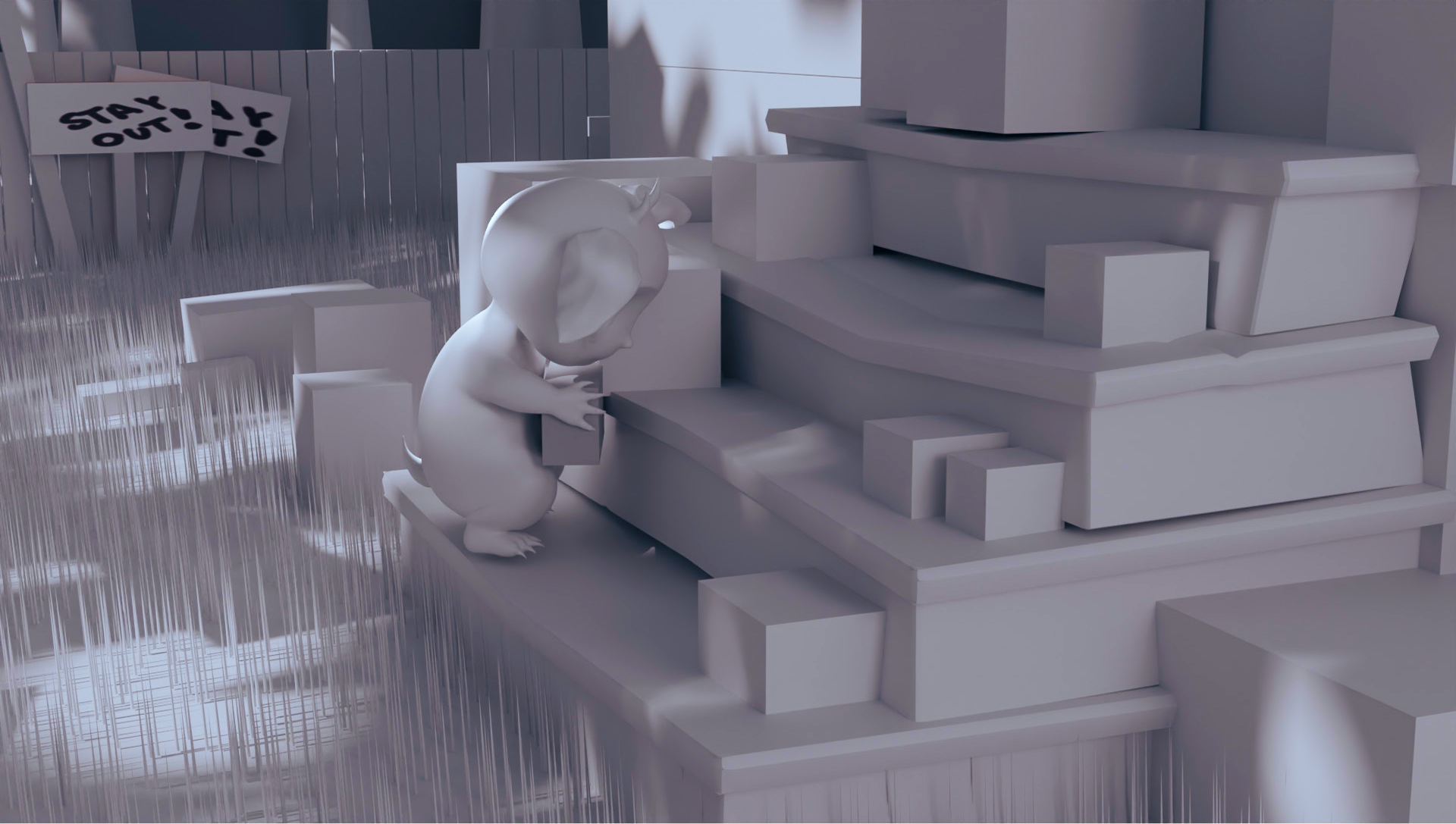
Kilix has big, adorable eyes, a cute little nose and a small snout. His ears reflect the shape and texture of forest leaves. Two tiny horns poke out between the decorative leaves on his head. He has four limbs: two short arms and two stubby legs. His hands or paws have four fingers with short, simple claws, and he has a tiny tail for balance.
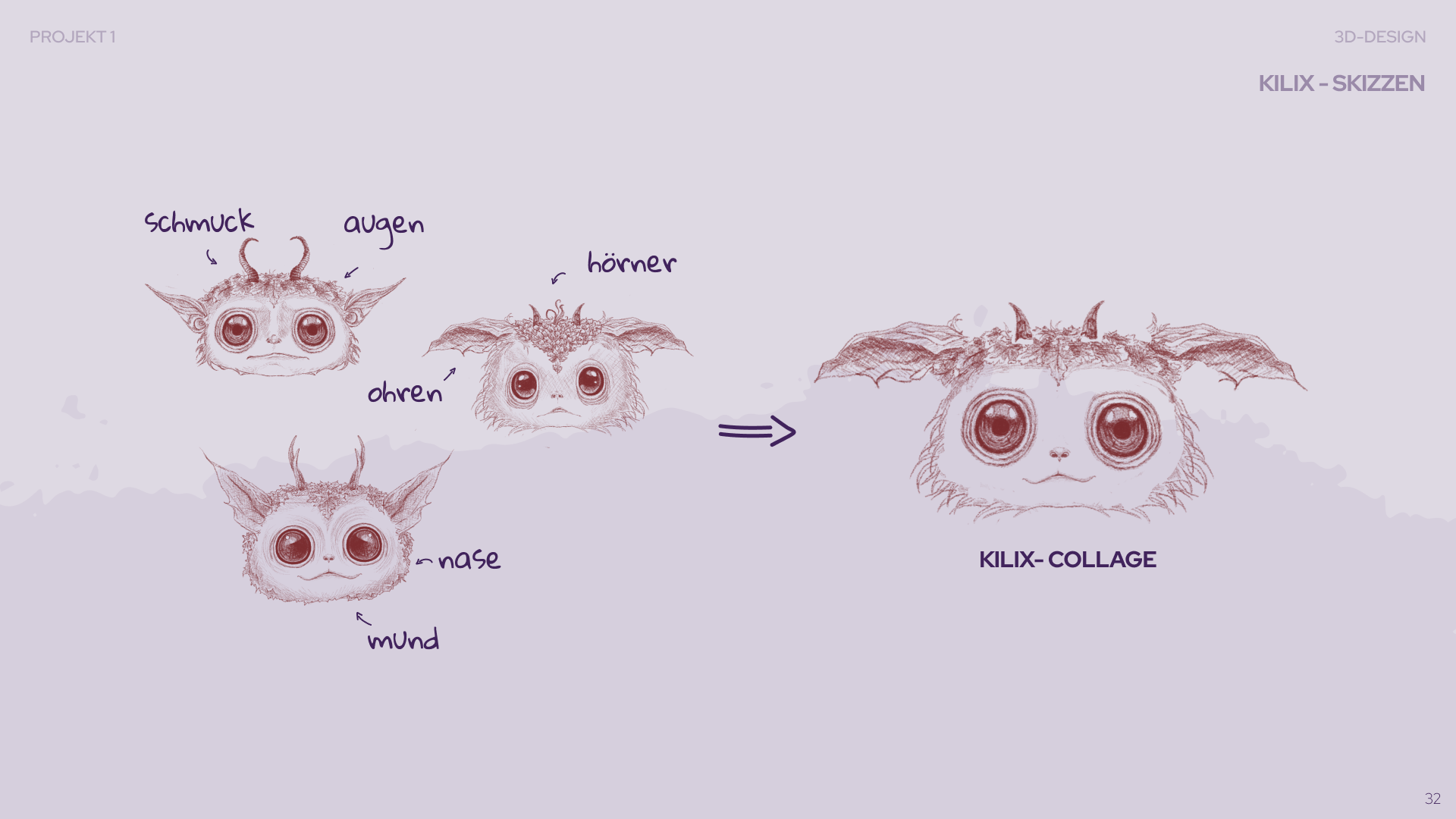
So I first used other animals as models and made sketches and variations. The horns, for example, were based on those of goats, gazelles and deer.
I then took the most fitting features from the three versions on the left and stitched them together to create Kilix.
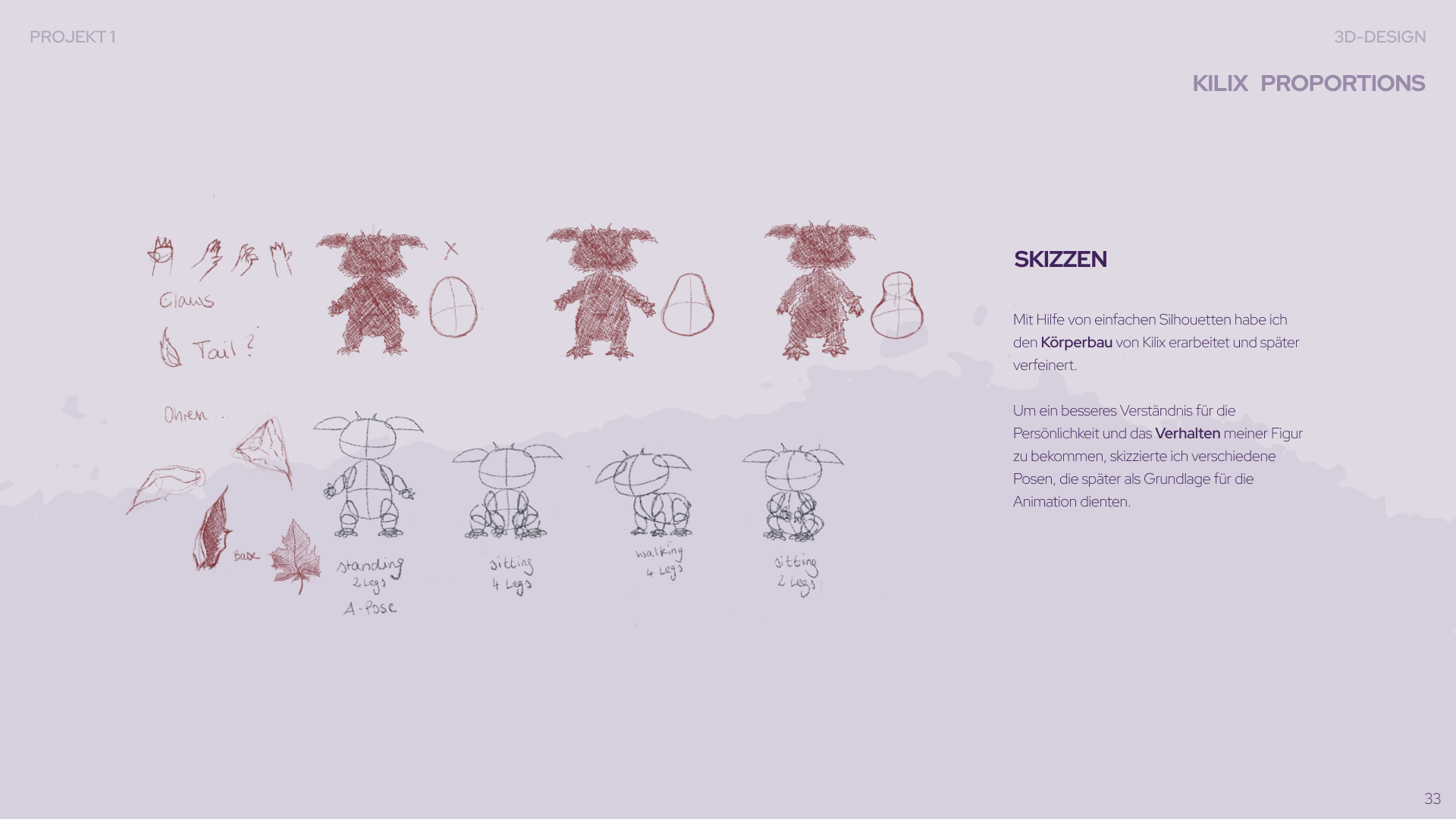
With the help of simple silhouettes, I developed Kilix’s physique and later refined it.
To gain a better understanding of my character’s personality and behaviour, I sketched various poses, which later served as the basis for the animation.
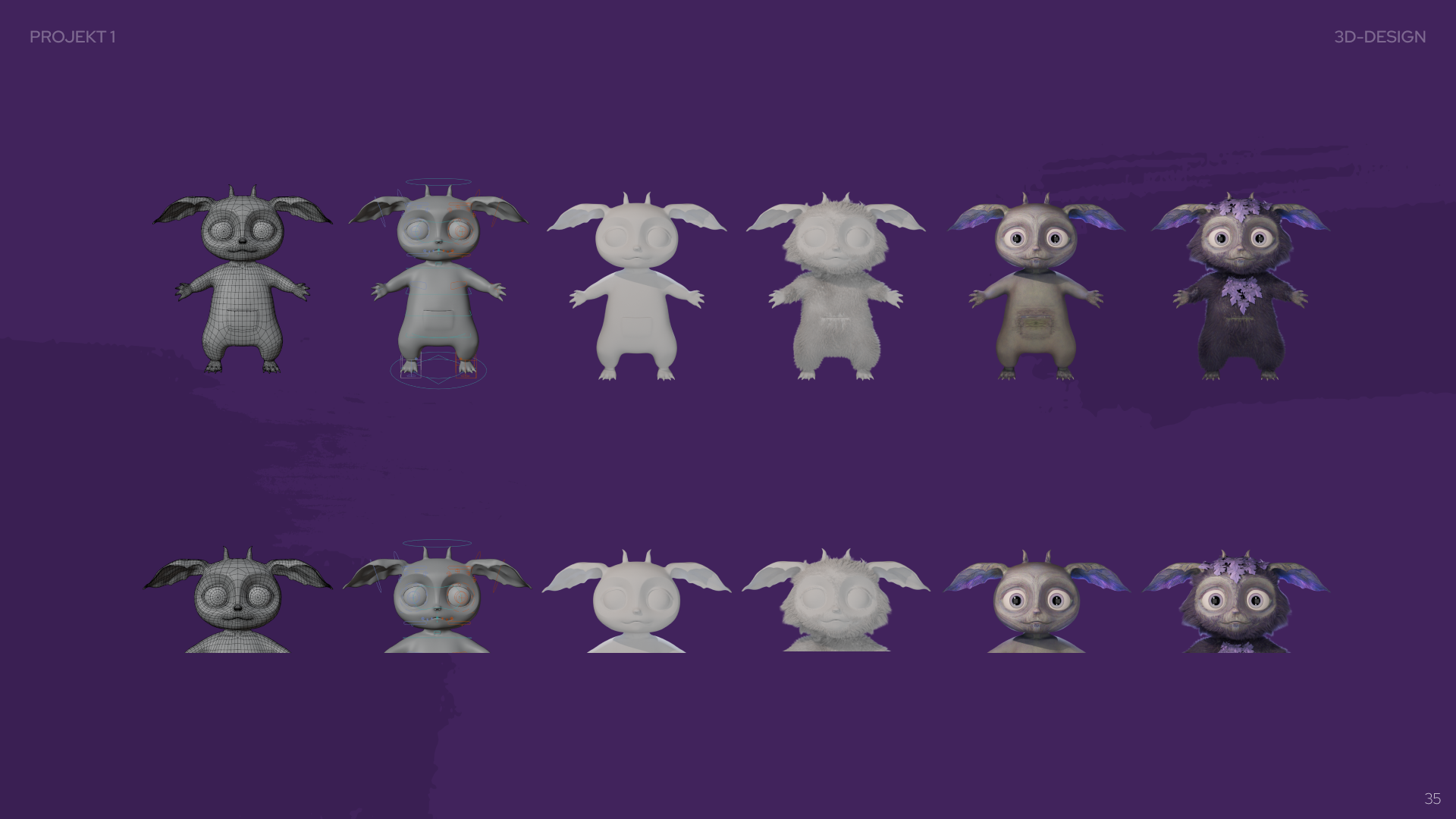
The character was primarily created in Blender. The process began with concept sketches that were used to block out the main proportions and silhouette of the character in 3D. Once the base form was established, the model was fully sculpted, refining anatomical forms, facial features and surface details to achieve a more organic, expressive and stylized look.
After the sculpt was finalized, the character was retopologized using RetopoFlow. This step transformed the high-resolution sculpt into a clean, animation-ready topology.
The fur was generated using Blender’s Geometry Nodes system, combined with assets from Blender’s Asset Library. Geometry Nodes were chosen for their procedural control over density, length and distribution, making the fur flexible, non-destructive and easy to adjust throughout production.
Finally, the character was rigged using Auto-Rig Pro and refined through weight painting. This allowed Kilix to be posed and animated efficiently while maintaining clean deformation across joints and detailed areas.
This project was inspired by the video ‘Le Roi Tulipe’ (2019). The short film is about a king who is obsessed with a red tulip and gradually descends into madness over the course of the video.
We were impressed by the portrayal of idyllic beauty in contrast to madness and obsession, as well as the interplay of light and darkness, and therefore took this video as our model.
To get incorporate the inspiration, I gave the character’s skin a stylised texture. This was created in Substance Painter using hand-drawn strokes and swirls. These textures give the world an imaginative, stylised character and Kilix himself an imaginative, mystical personality.
In ‘Le Roi Tulipe’, the skin texture was used as a sign of descent into madness. With Kilix, this feature forms the basis for his design and reflects his connection to the forest.
The Painter
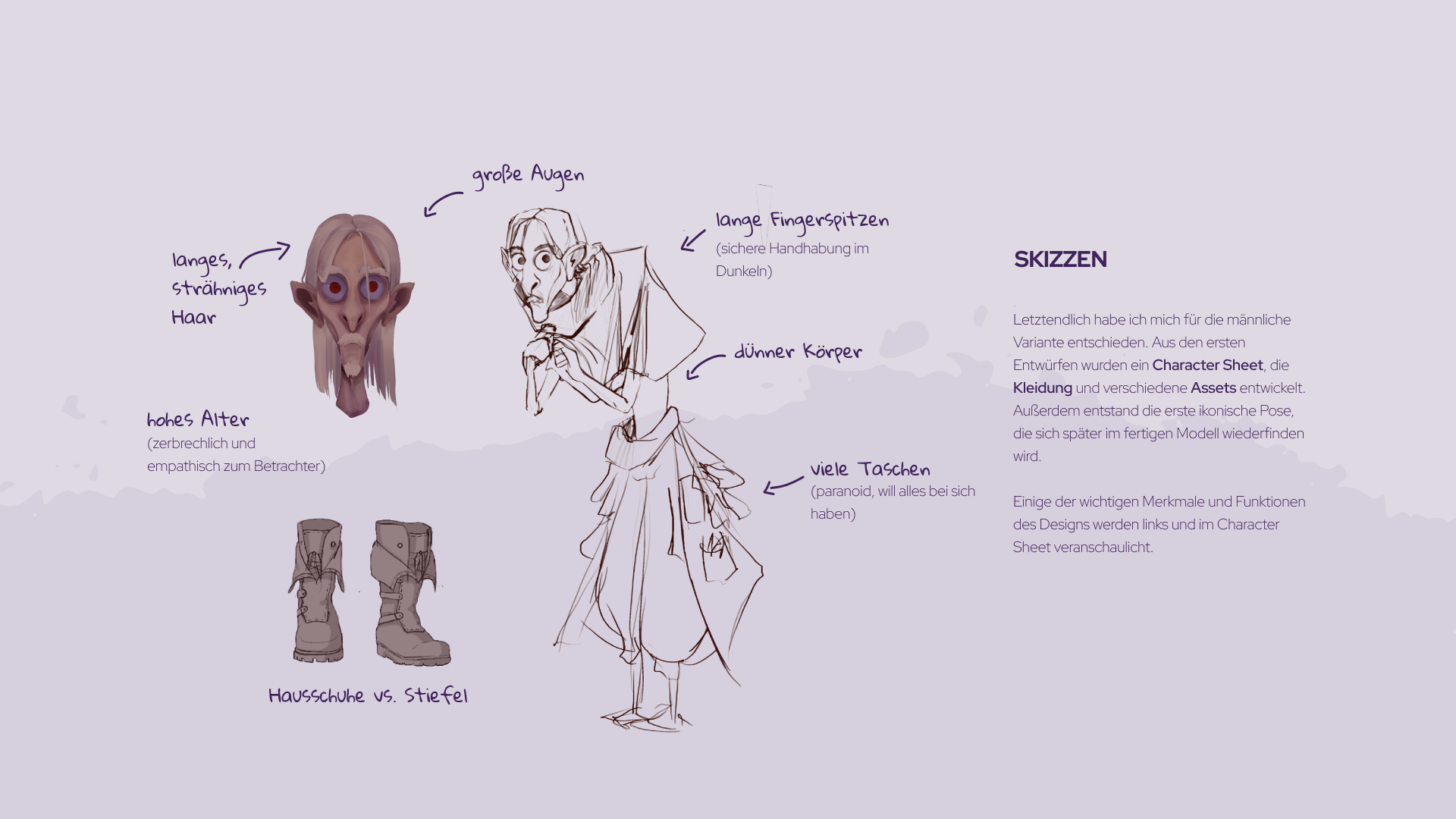
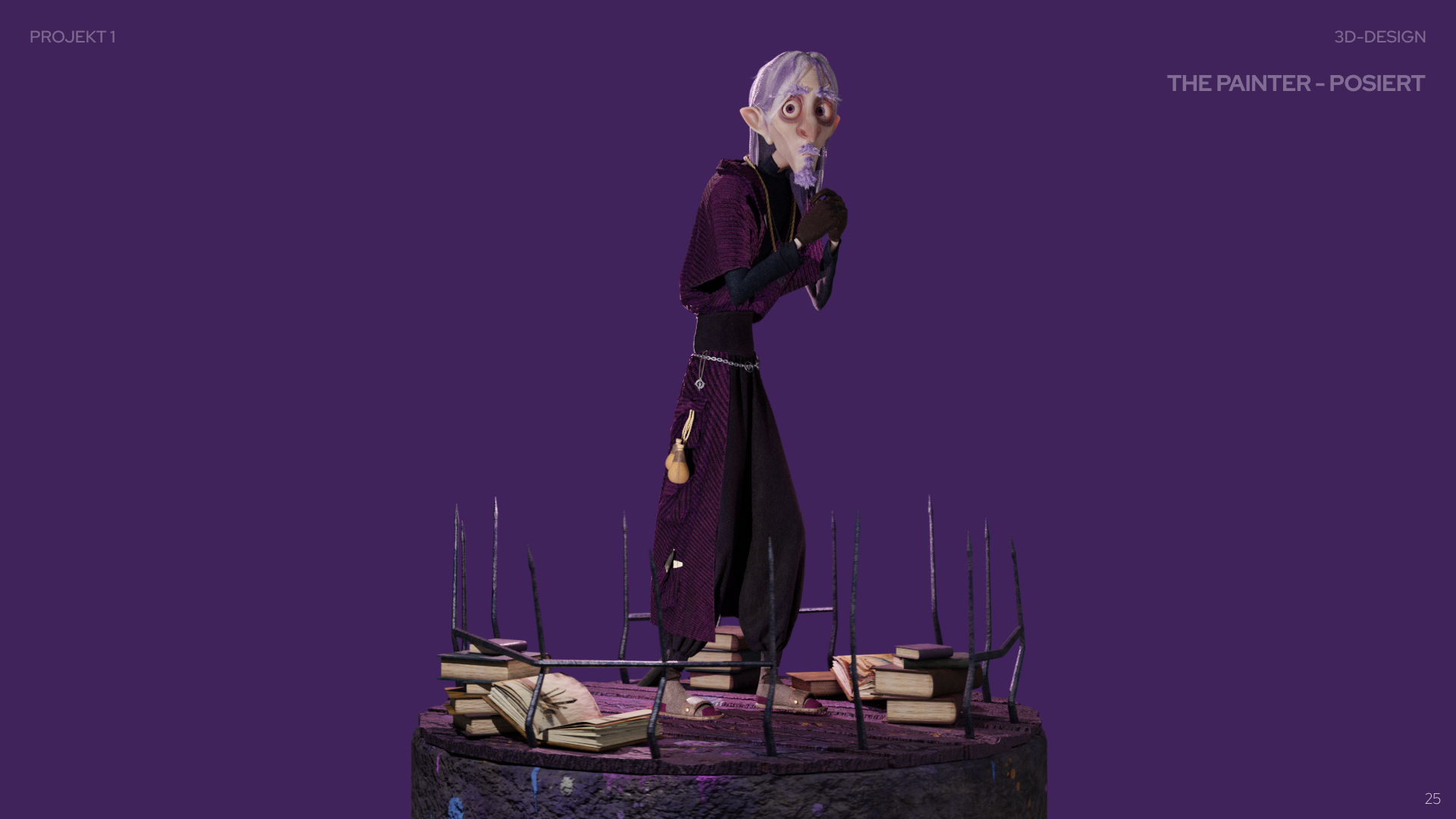
The Painter is an old man who is paranoid and fearful. He has distanced himself from the outside world and spends a lot of time inside his house in the dark. We wanted to incorporate the lack of light, food and social interaction into his visual character.
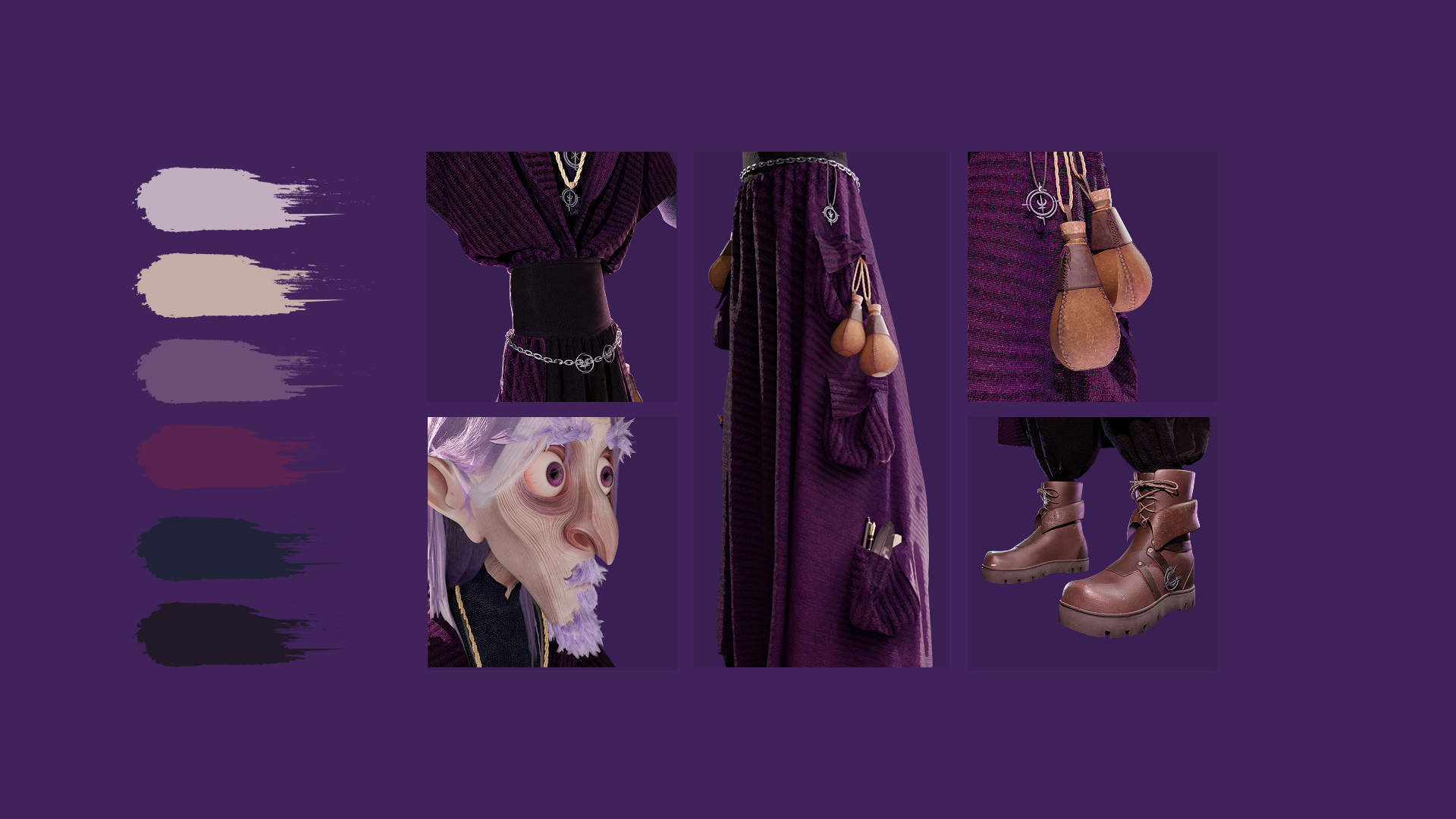
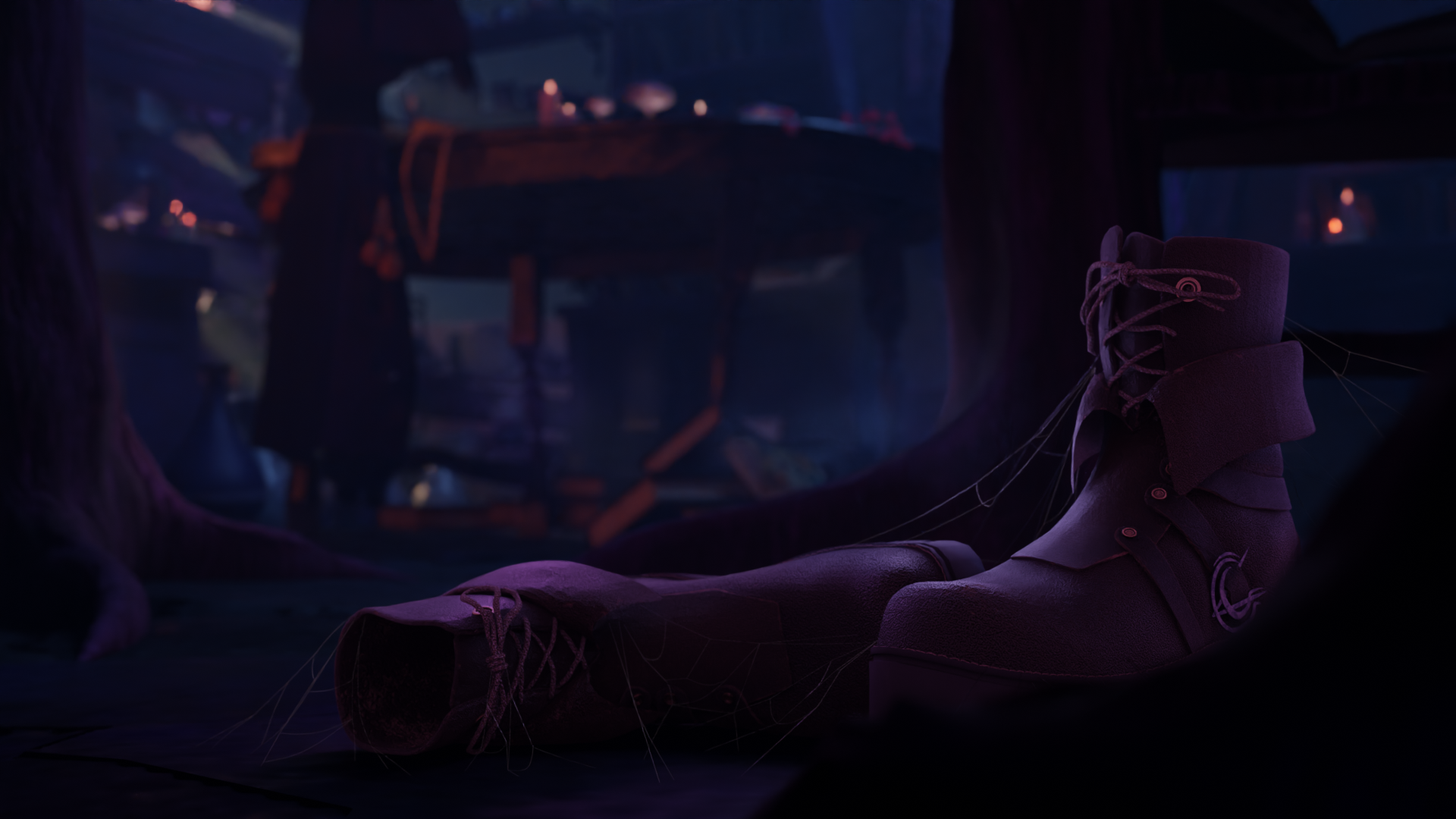
His face and body are emaciated, his eyes are huge and express his paranoia. He has long, unwashed, unkempt hair, and his ears are slightly bat-like to improve his hearing in the dark. His clothes are simple and practical, with various sized pockets and are big and comfortable. He usually wears simple house shoes, but he does possess a pair of cobwebby boots.
Over time, he has also become slightly paranoid and started wearing protection charms wherever he goes.
Ironically, like every artist, the Painter is obsessed with the unknown and studies every item he dares to gather from the forest. Thanks to his friendship with Kilix, he is able to do this relatively safely.
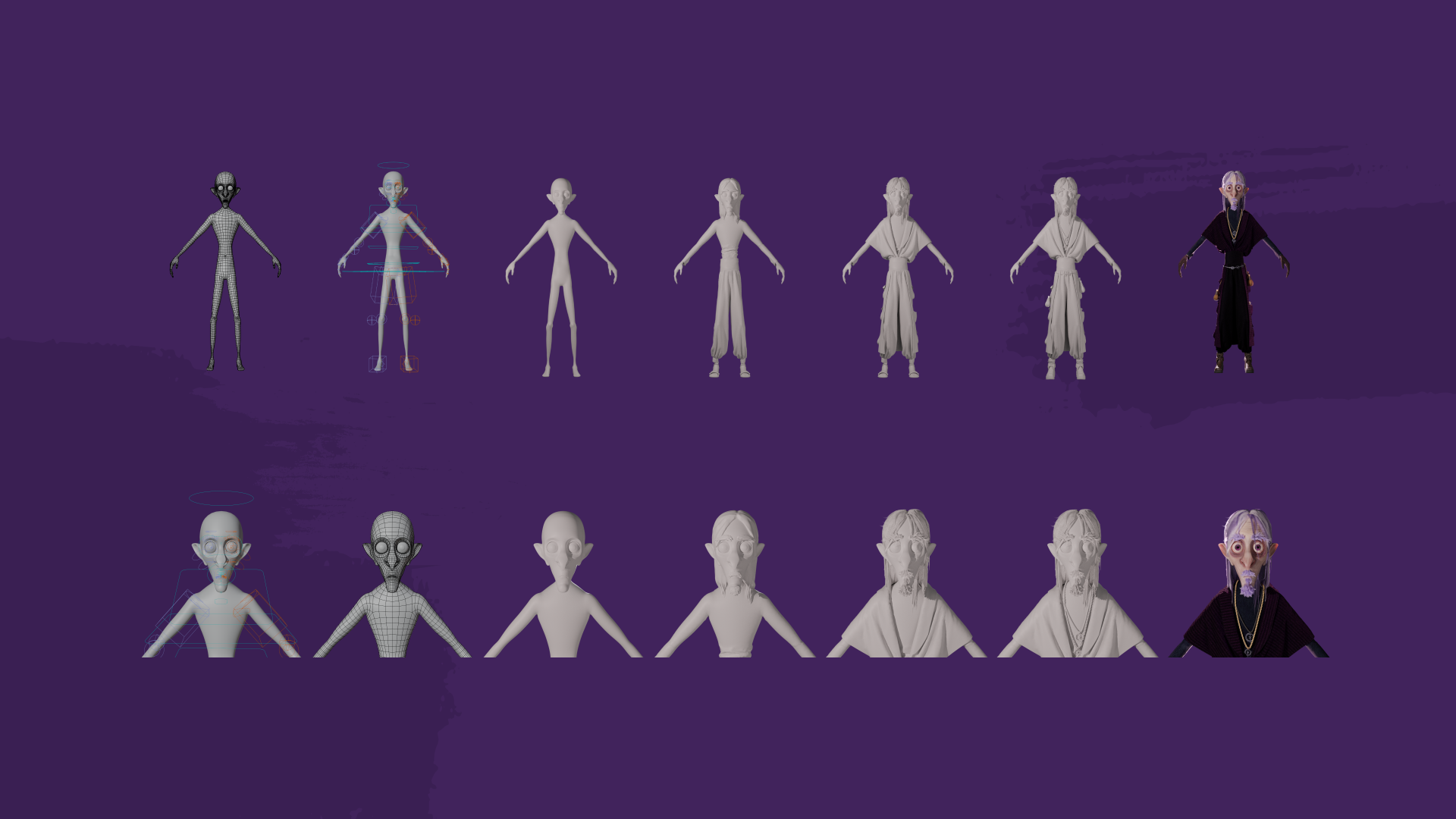
The Painter was also sculpted in Blender, then retopologised, rigged and weight painted for upcoming animations. The clothes were created in Marvelous Designer and then animated using a cage.
The character’s styling was incorporated in the same way as Kilix’s, using Adobe Substance Painter with hand-painted strokes and swirls. This technique allowed us to portray his paranoia and highlight the sharp edges around his face and sunken eyes.
The Forest & Cave
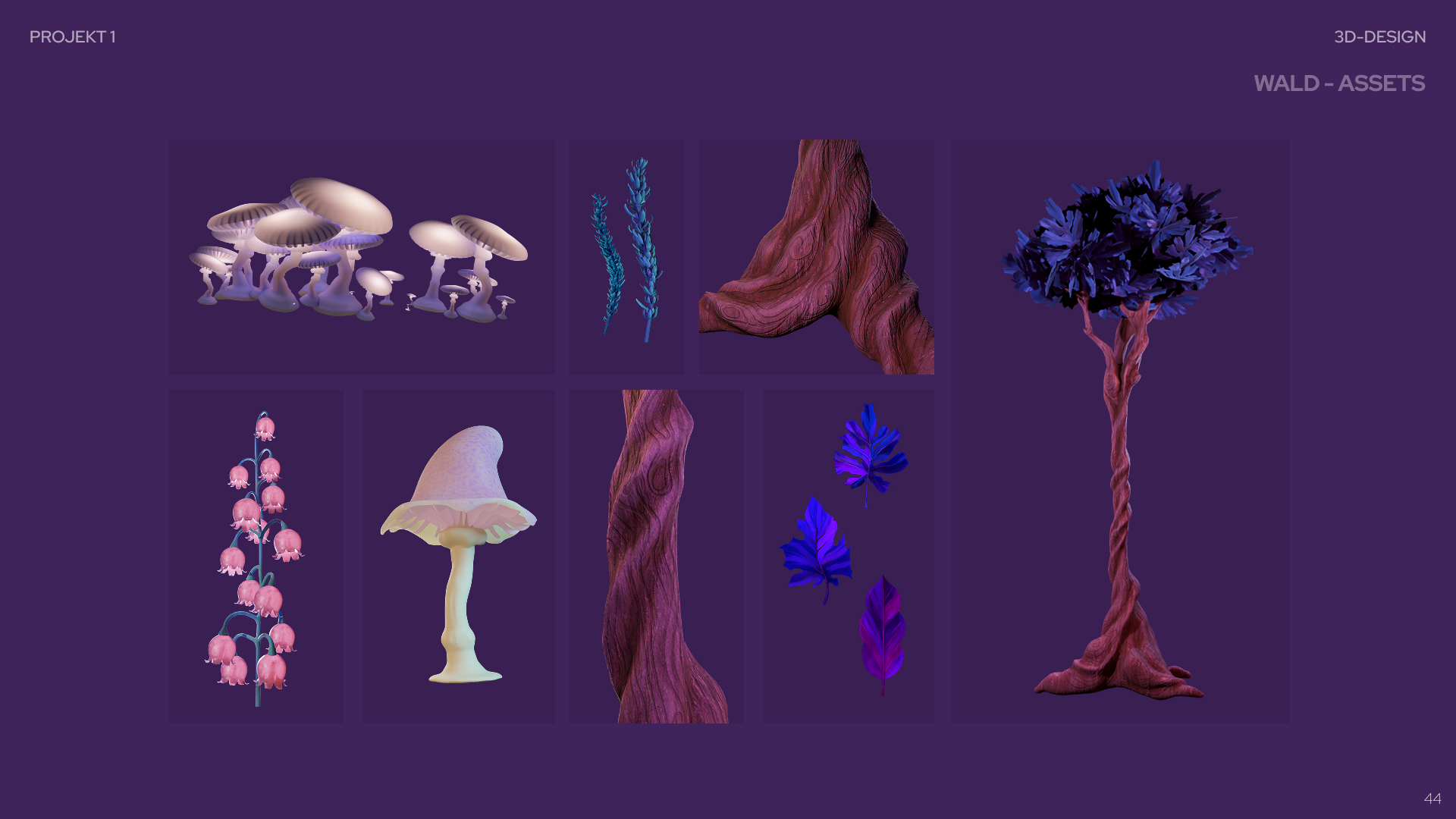
In theory, the forest is a beautiful and magical place, despite what the Painter thinks. For the colour palette, we chose a very contrasting style with blue, pink and orange as the main colours.
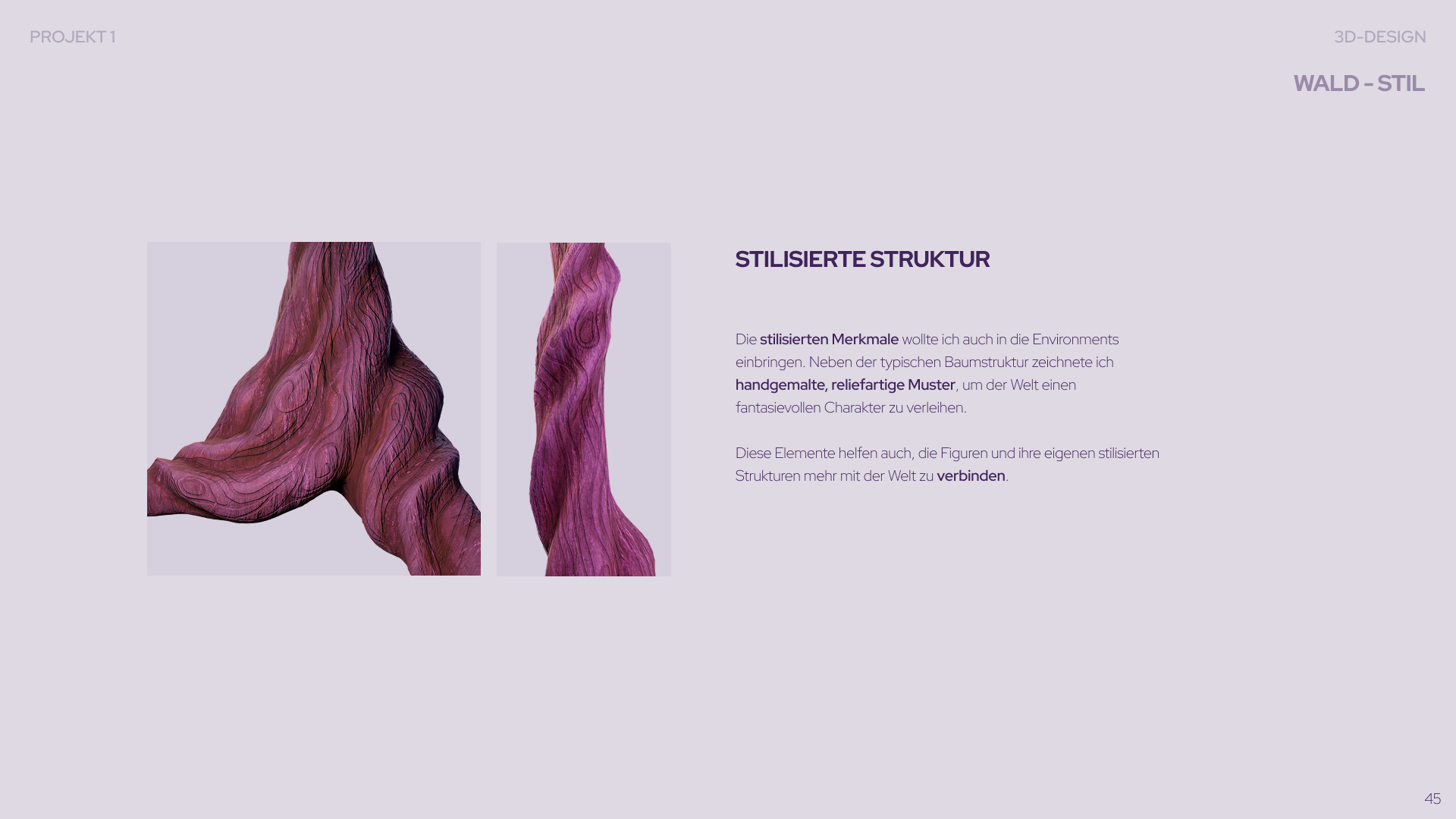
The idea was to make it look slightly obscure and abstract by incorporating the stylisation of the characters into the design. This is particularly evident in the texture of the trees, where we incorporated hand-drawn lines and swirls into the bark.
We designed soft, textured leaves with sharp edges in Procreate. The leaf design is reflected in the shape of Kilix’s ears, and the leaves are part of his decorations, making him visually part of the forest.
Most of the other plants were created using Blender’s Geometry Nodes. The placement of the plants was achieved through object scattering, which was controlled via weight painting.
One of the main plot lines is Kilix’s captivity in the Teepot civilisation.
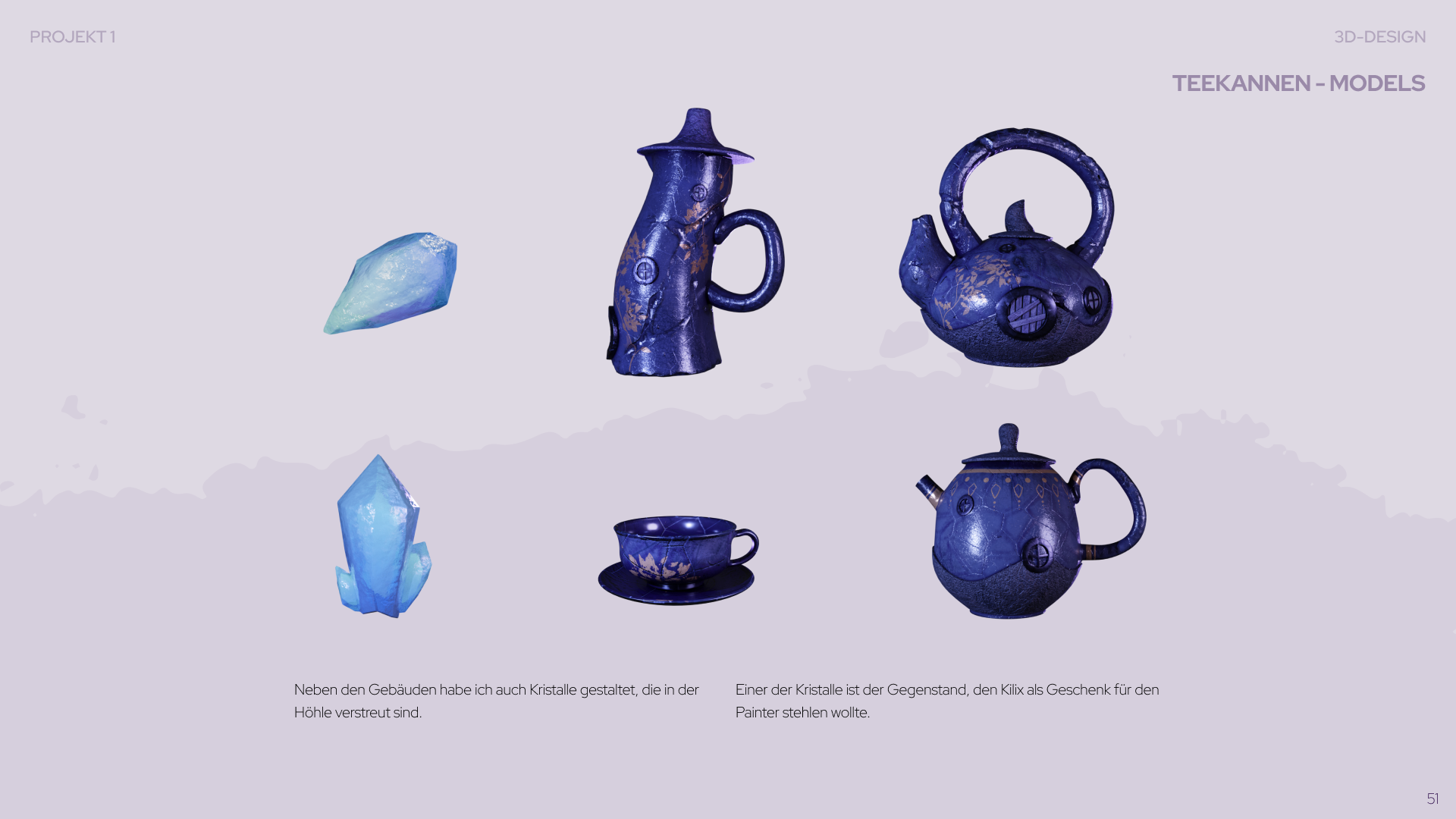
The Teepot civilisation are tiny creatures living in teapots in a gigantic cave. They are very protective of their environment, especially their crystals.
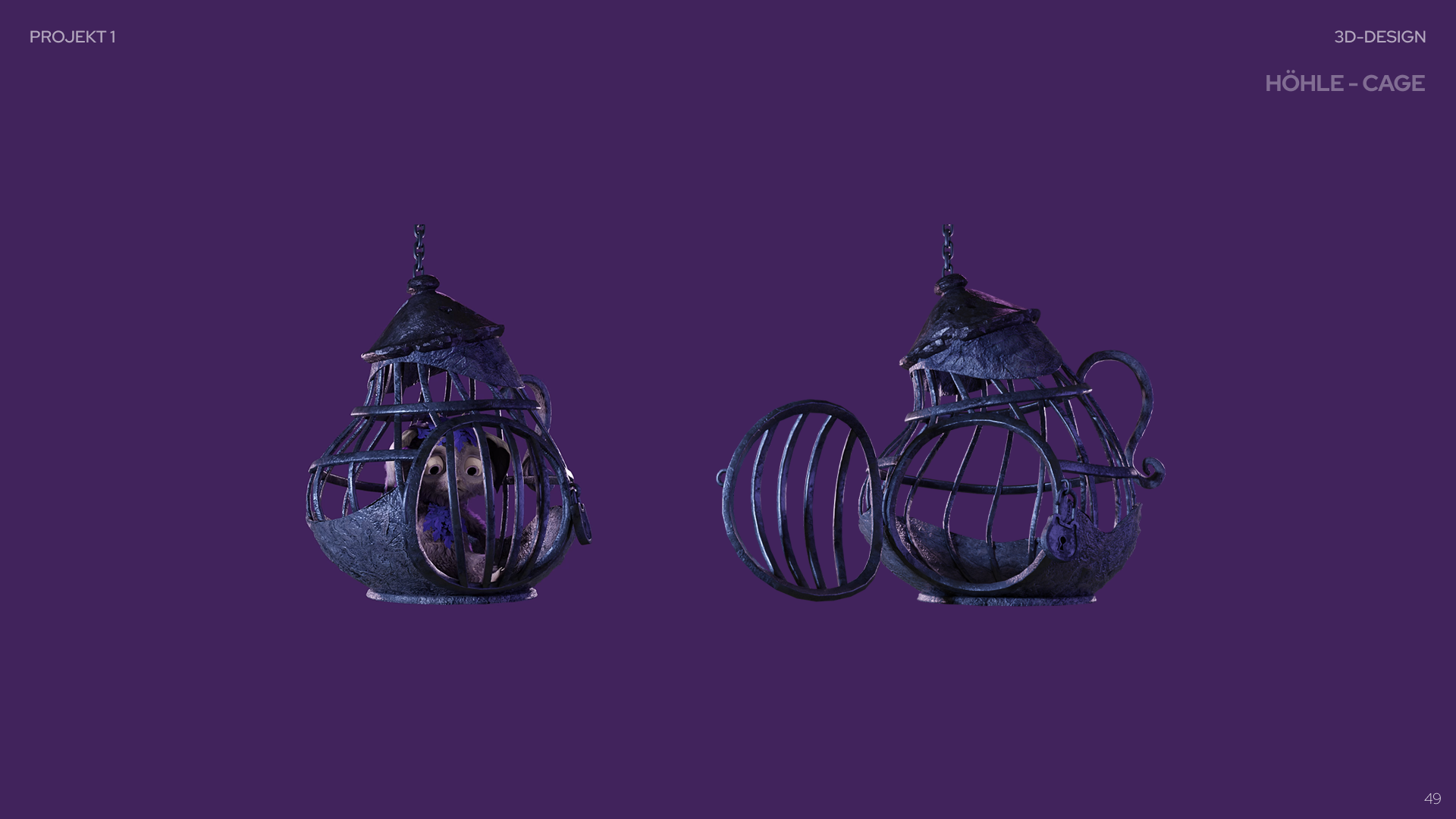
We adapted the concept of teapots and teacups from very old Chinese designs to create little homes for the creatures, making it seem like a little city. Kilix’s cage is also based on the design of a teacup, only with metal bars instead of china. To achieve this, we created sketches of different designs, which were then modelled in Blender and textured to match the metal texture of the house, providing a reference point.
Next to the houses and cage, we created glowing crystals scattered around the cave. One of these crystals is later attemptedly stolen by Kilix.
The House
When designing the house, I wanted to reflect the painter’s personality and character traits.
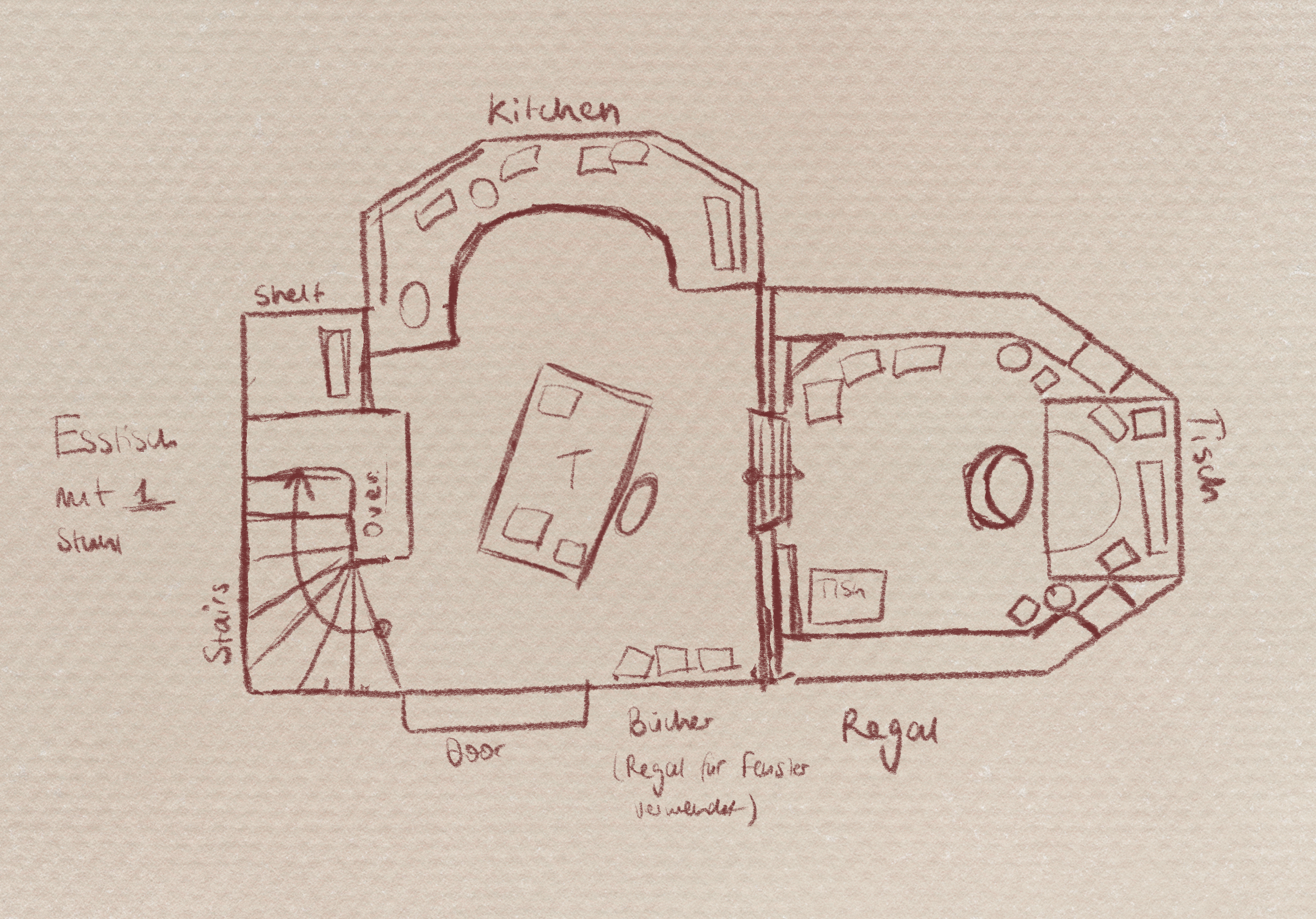
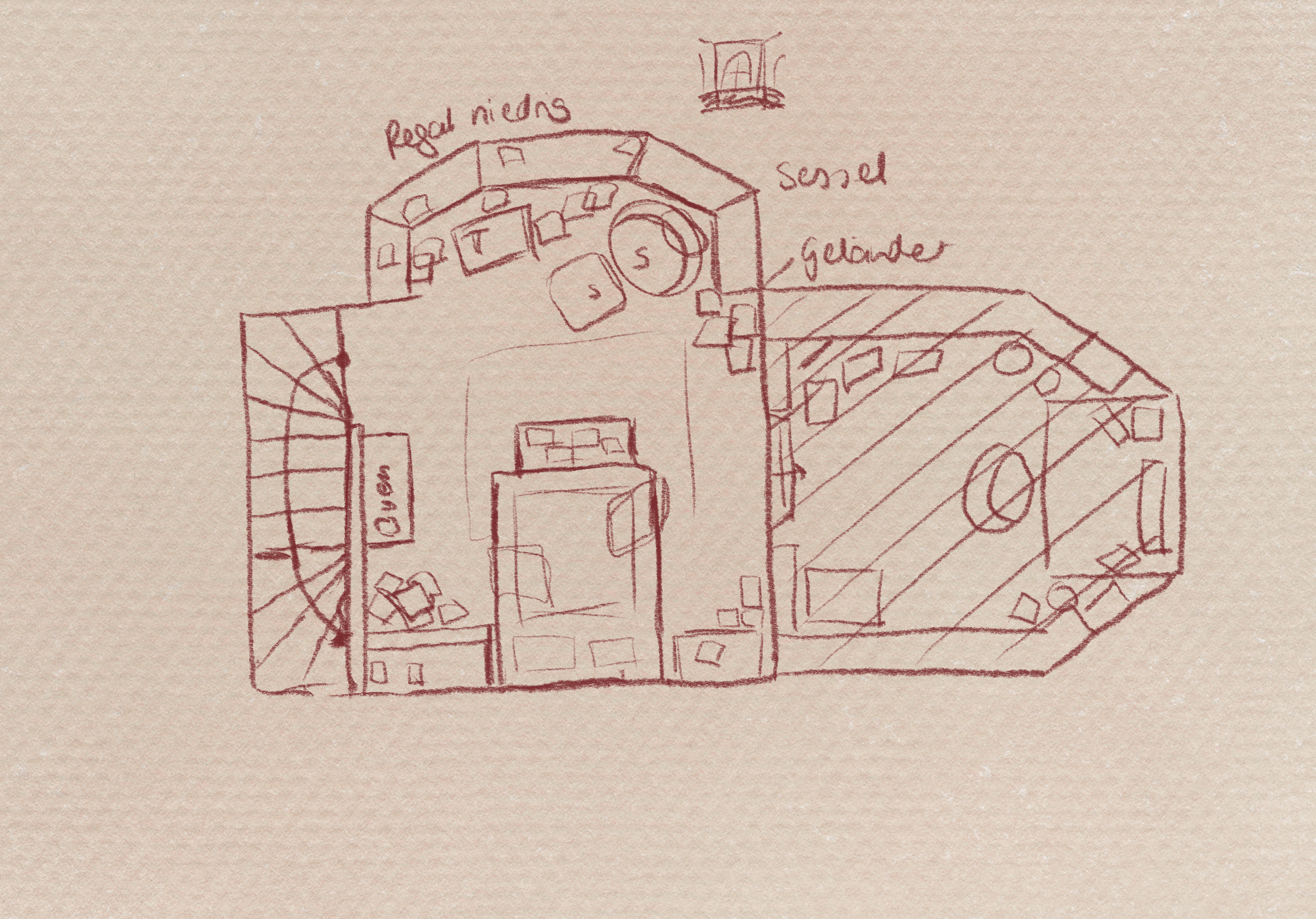
The base is a simple wooden house with stone flooring and stained glass windows in vibrant colours. The swirly, colourful forest design is incorporated into the house’s details. There is a large living room with an open-plan kitchen, and stairs lead up to the bedroom and a door opens onto a study. Small paintings and pictures, or paint splashes, cover the entire house, from the furniture to the stairs.
So, how can I transform this beautiful, creative space into something dark and obscure that reflects the Painter’s fear?
Firstly, the house is surrounded by a fence with warning signs. The windows are bolted shut from the inside with wooden beams and the door is secured with multiple locks.
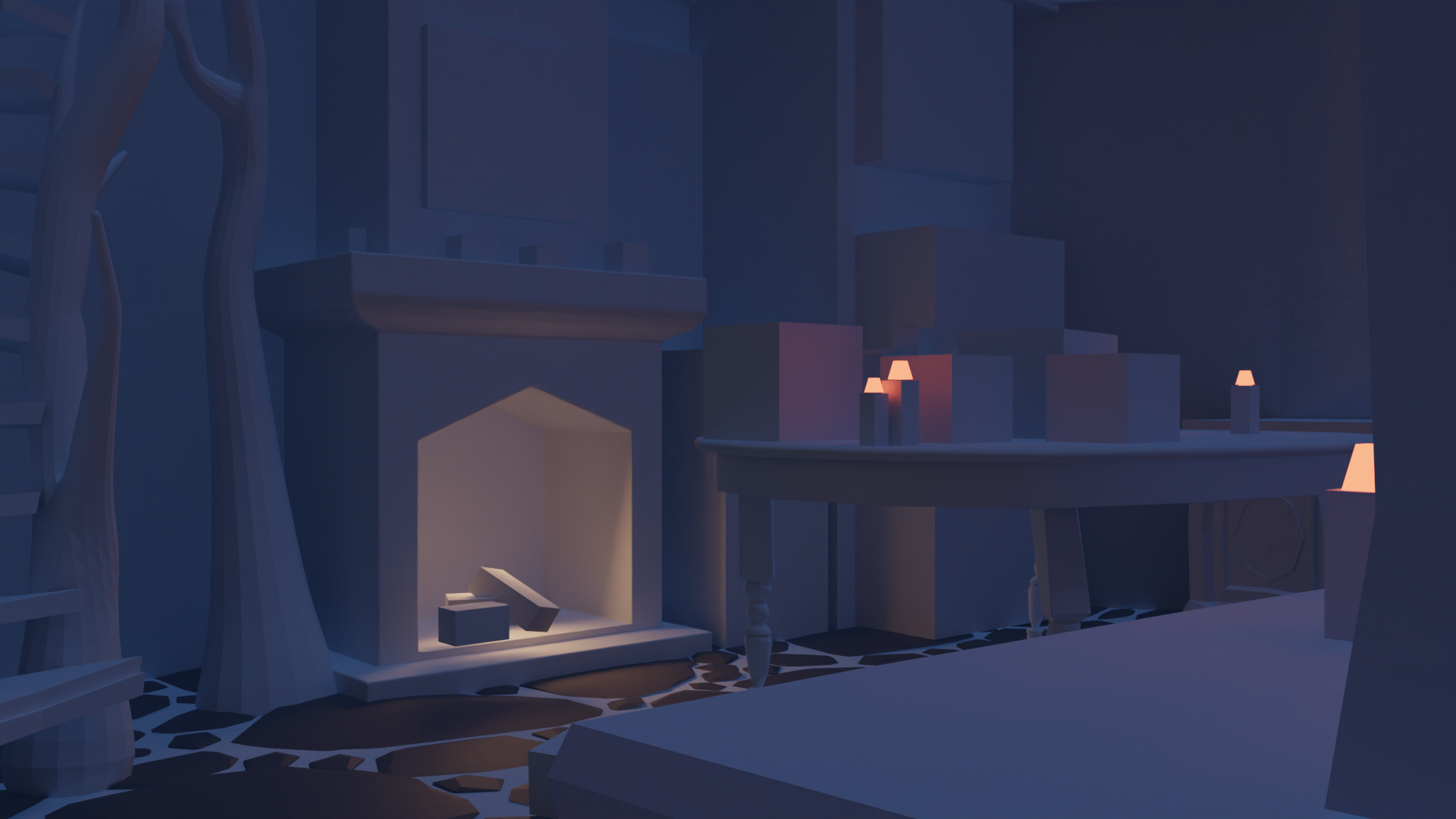
Candles and glowing plants are the only light sources, placed throughout the cramped house.
The kitchen is full of preserved food, and a wall in the living room is stacked with firewood all the way up to the ceiling.
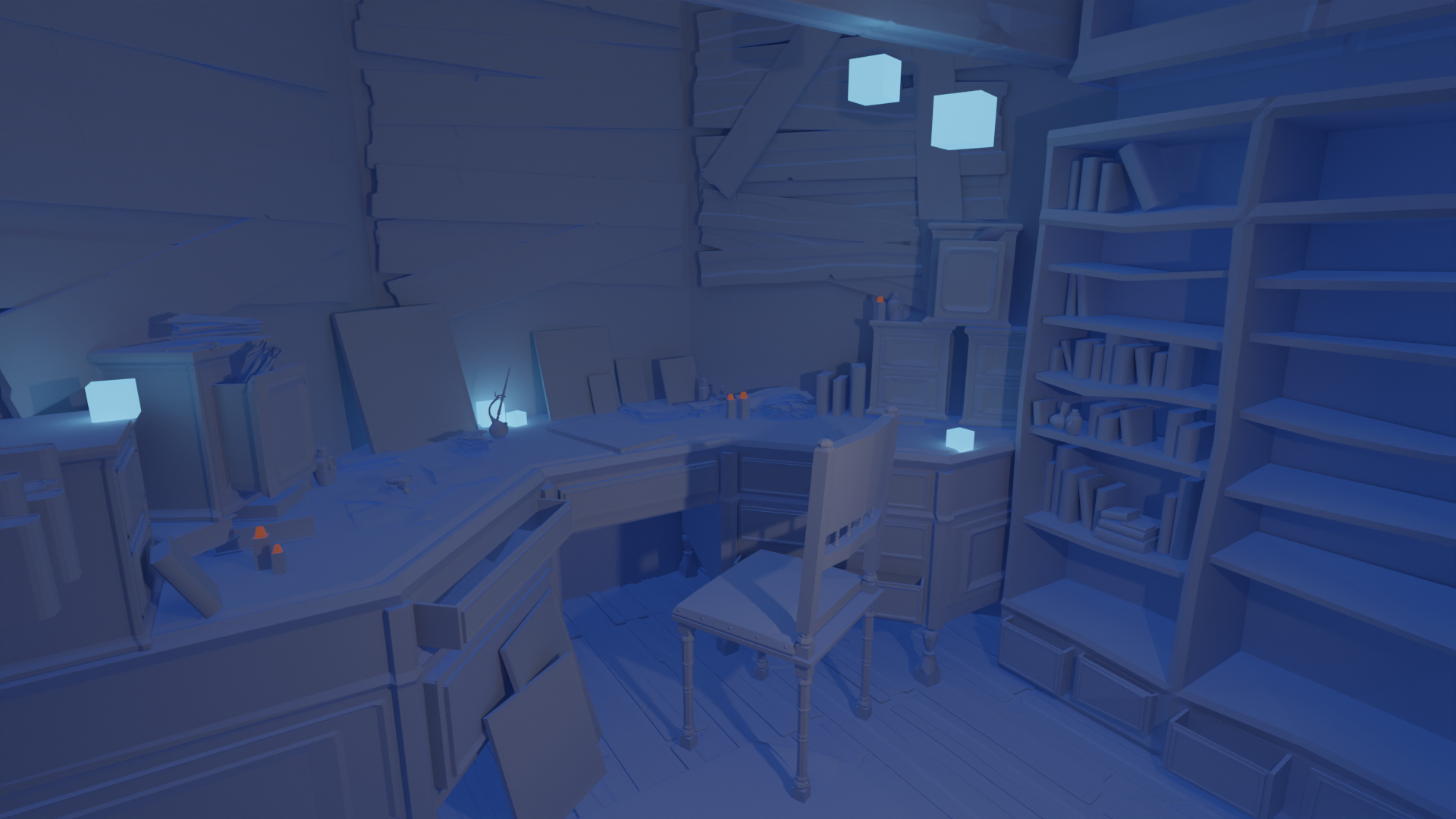
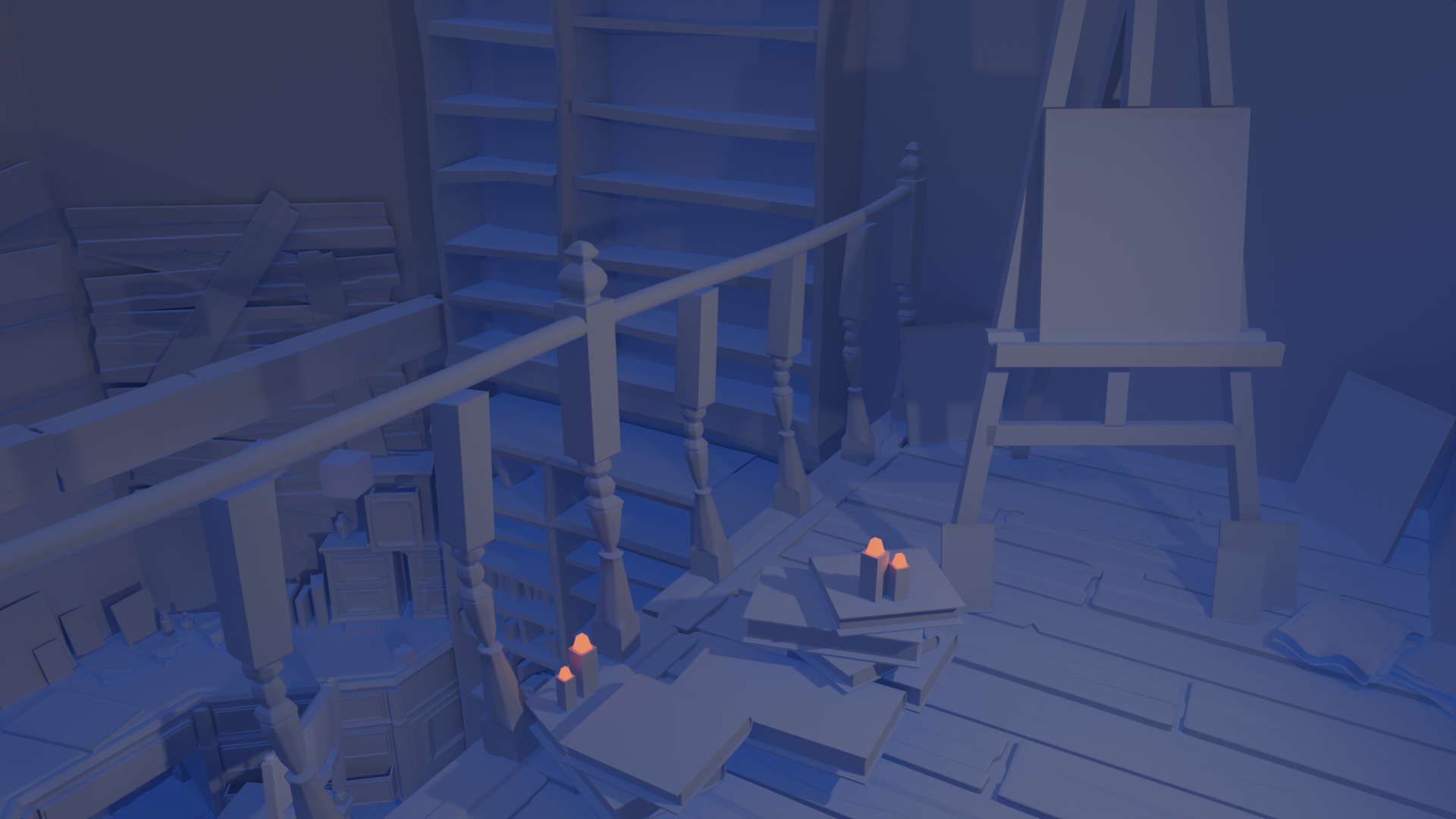
The painter’s obsession with the outside world is most evident in his study. The room used to have large, open windows to let in light, like an artist’s studio, but now these windows are barricaded. The shelves, which were once filled with books, paints, and brushes, are now filled with plants and crystals of every kind — gifts from Kilix. There are sketches and paintings of these items everywhere, although they are slightly obscured and do not accurately depict the forest.
The first step was to turn my sketches and ideas into a blockout using shapes that were proportionally appropriate, with the Painter’s size as a reference point.
This helped me to determine which furniture and accessories were needed, as well as how to alter and style the shapes.
Although I prepared the entire house in this way, I only proceeded with the next steps for the rooms and sections required for the style frames.
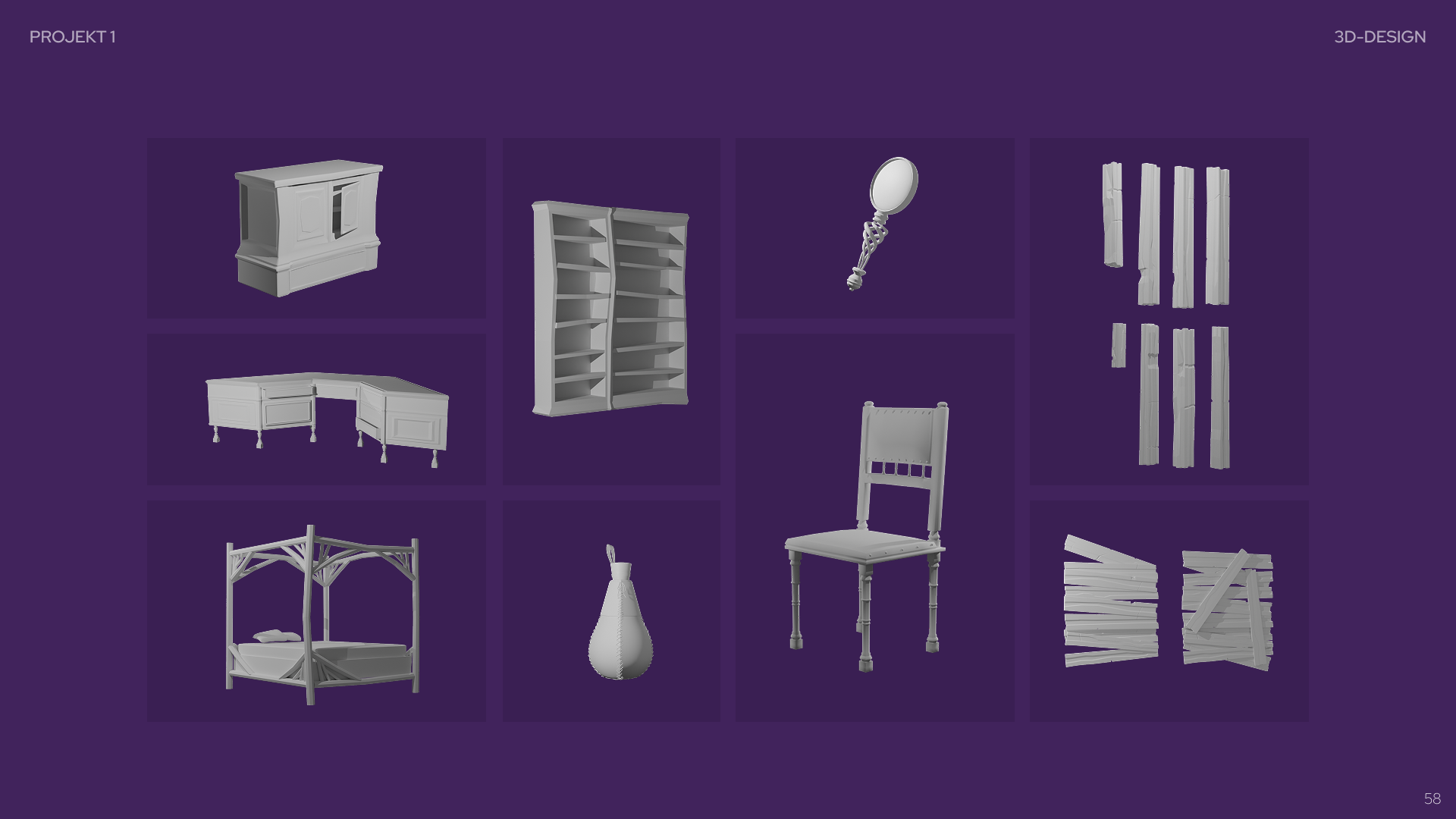
I used the blockouts as a reference for dimensions, then modelled the furniture and assets and replaced the blocks.
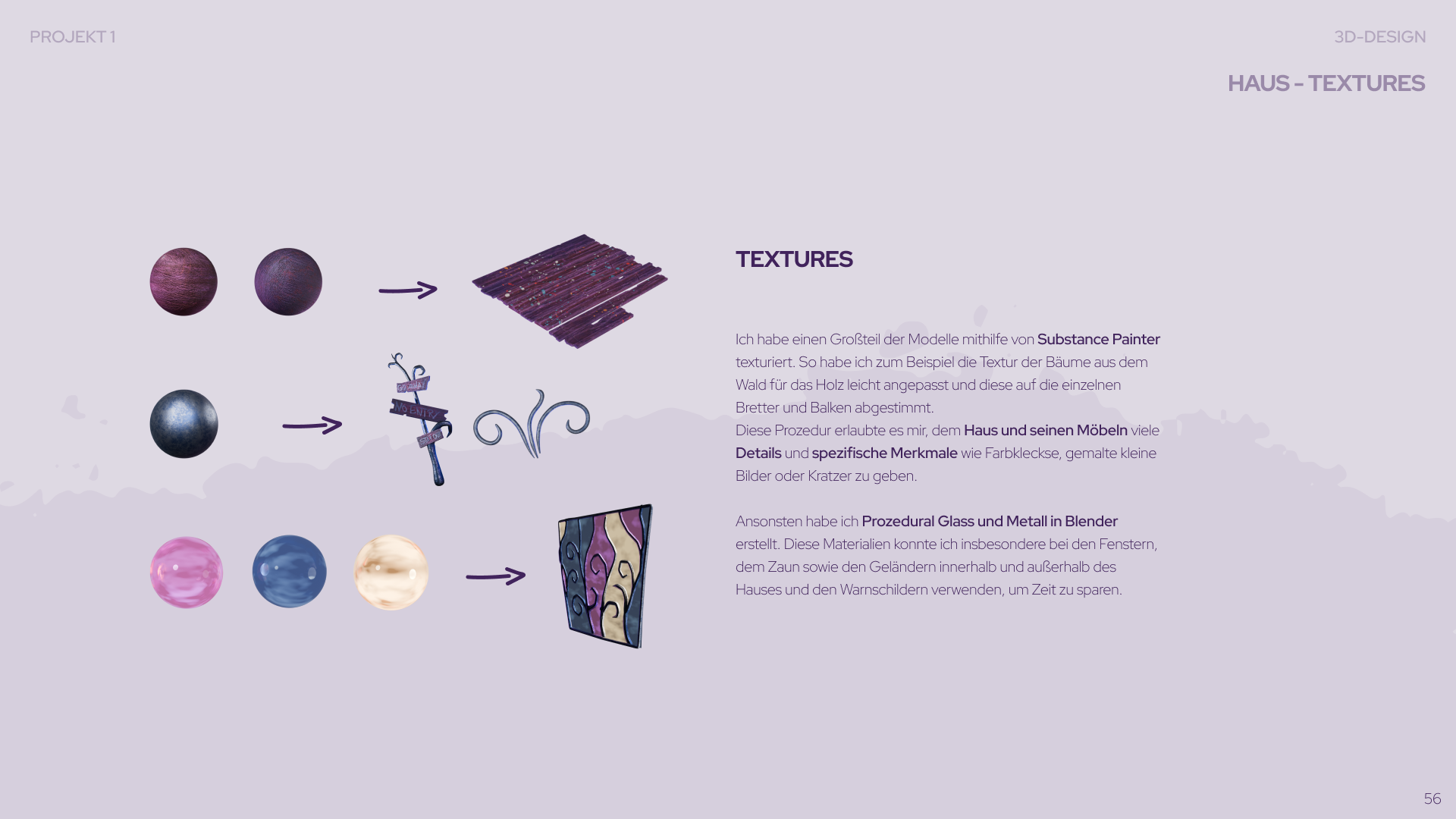
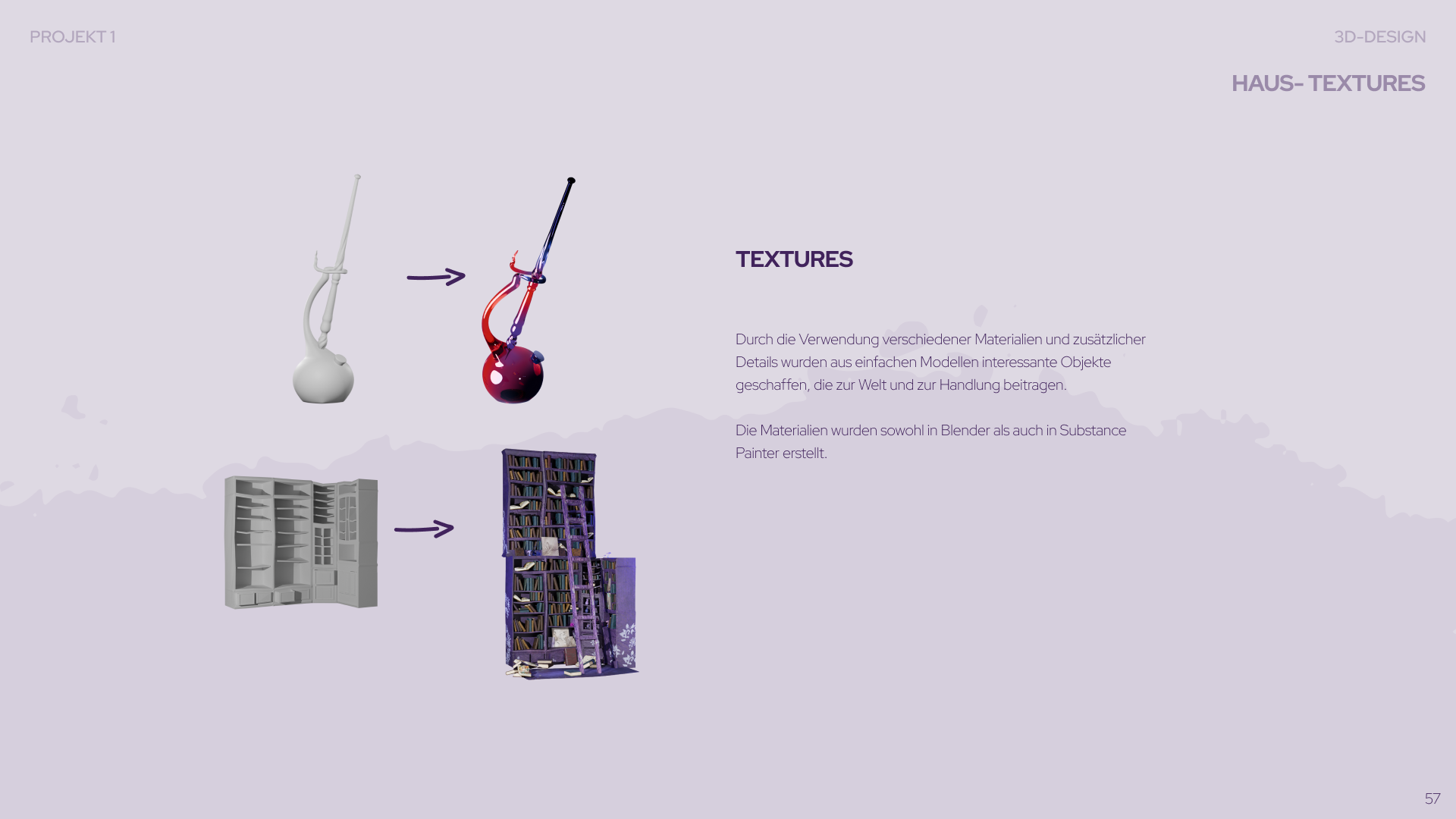
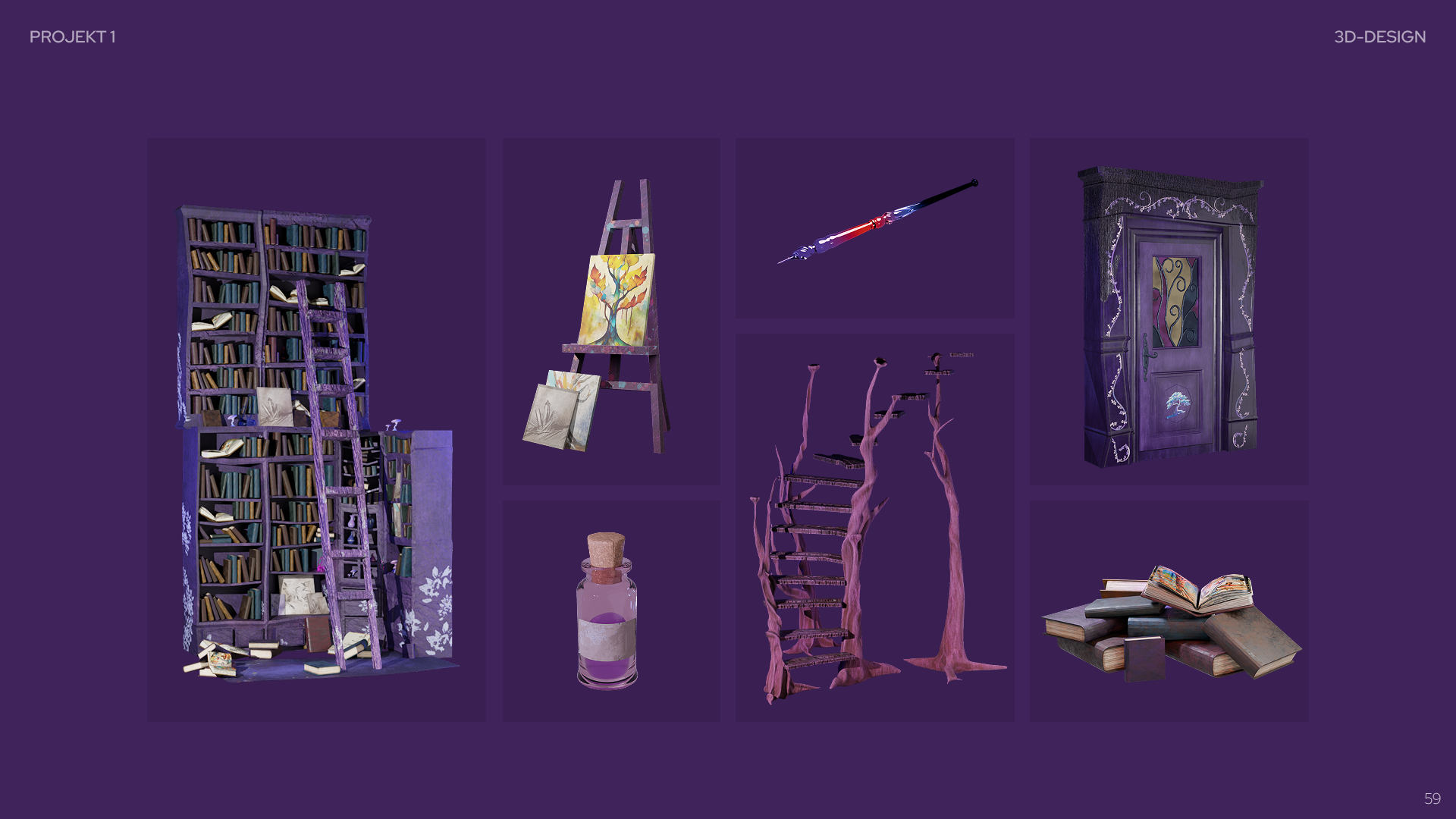
Once I had all the models, I started texturing them. For items that required a high level of detail, I used Adobe Substance Painter for texturing. I made the glass and metal textures in Blender using procedural textures. I did the same with smaller, less detailed items to save time.
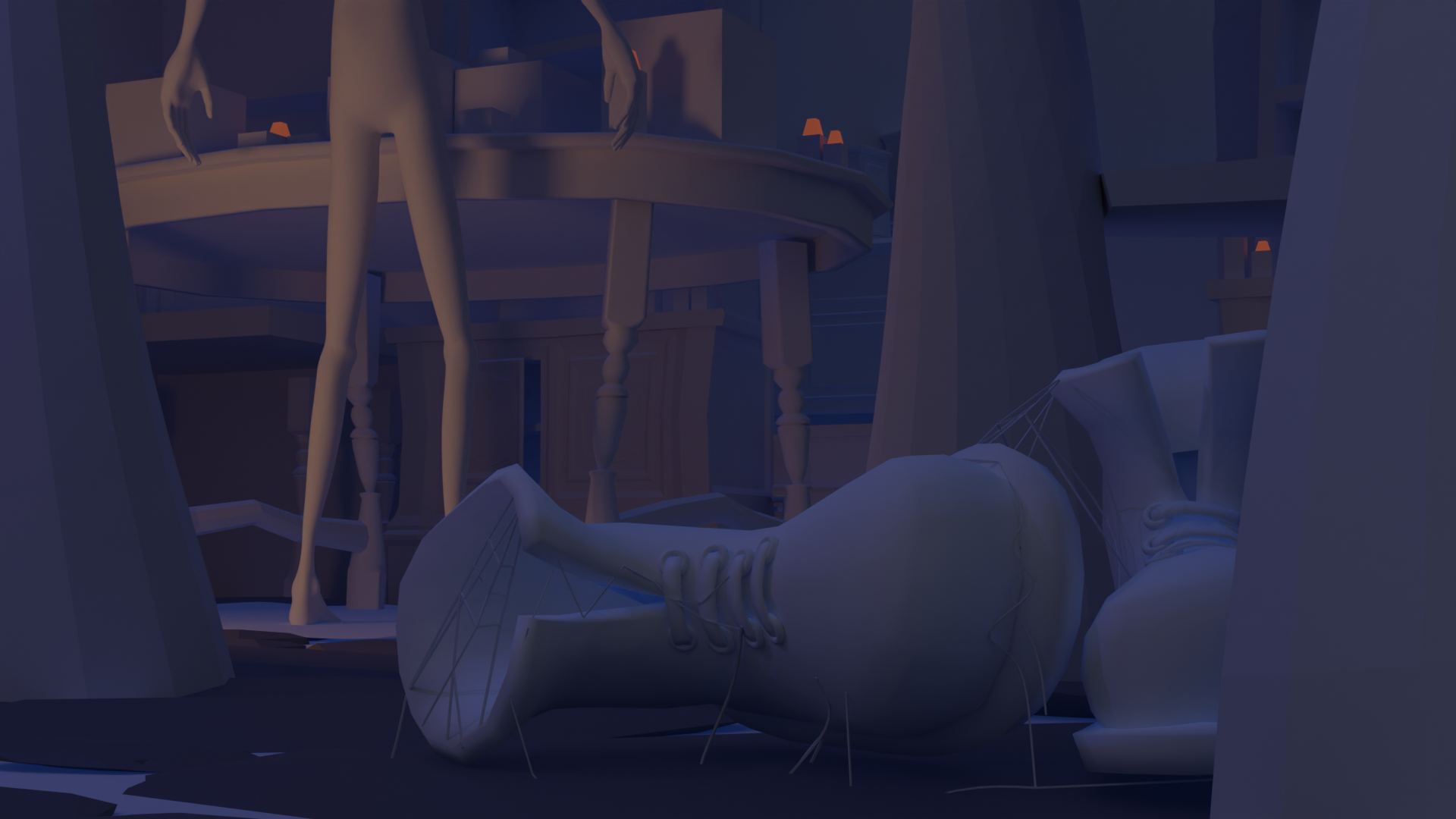
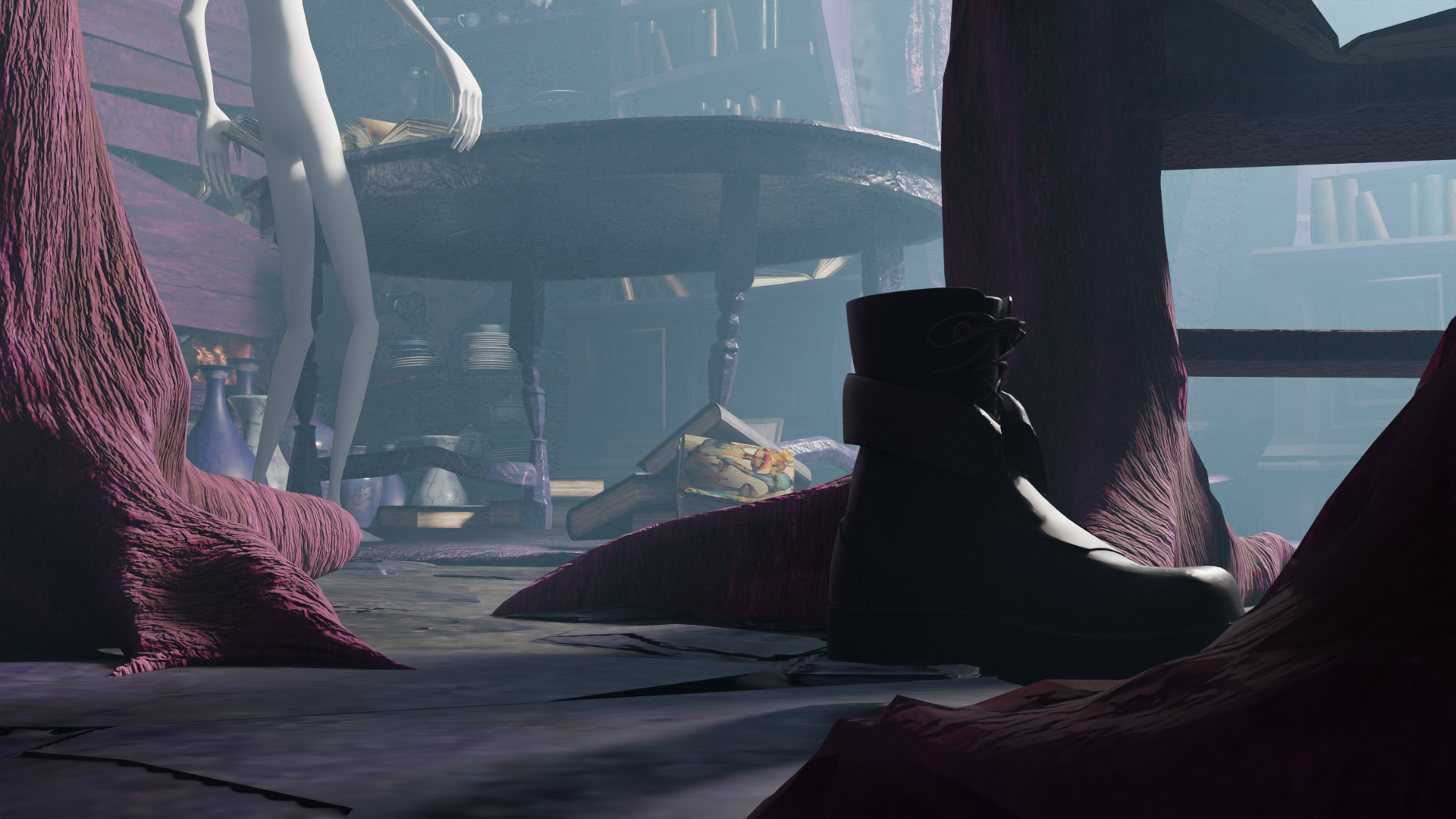
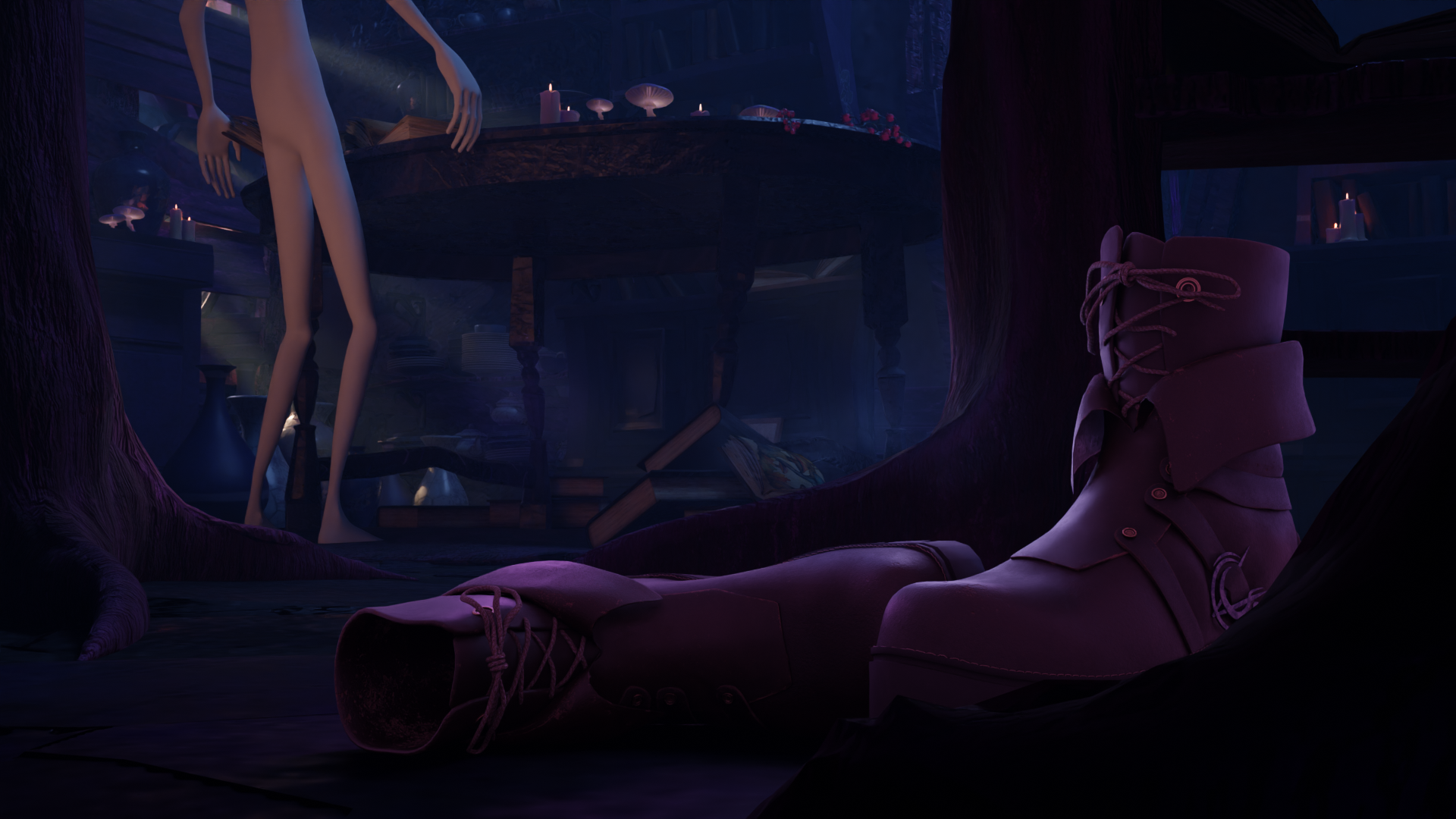
Here you can see the process with one of the style frames. It goes from white forms, to texturising, to camera placement and lighting, and finally working with depth and focus blur. I then refined the animation in Adobe After Effects to add dust and exaggerate the god rays.